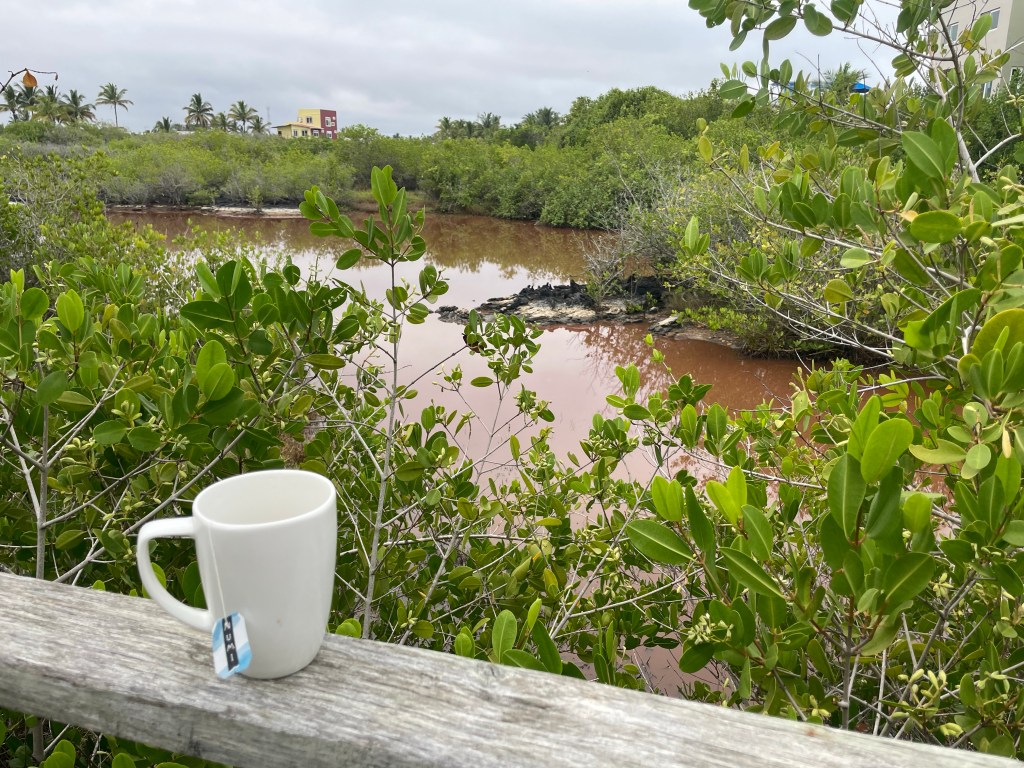
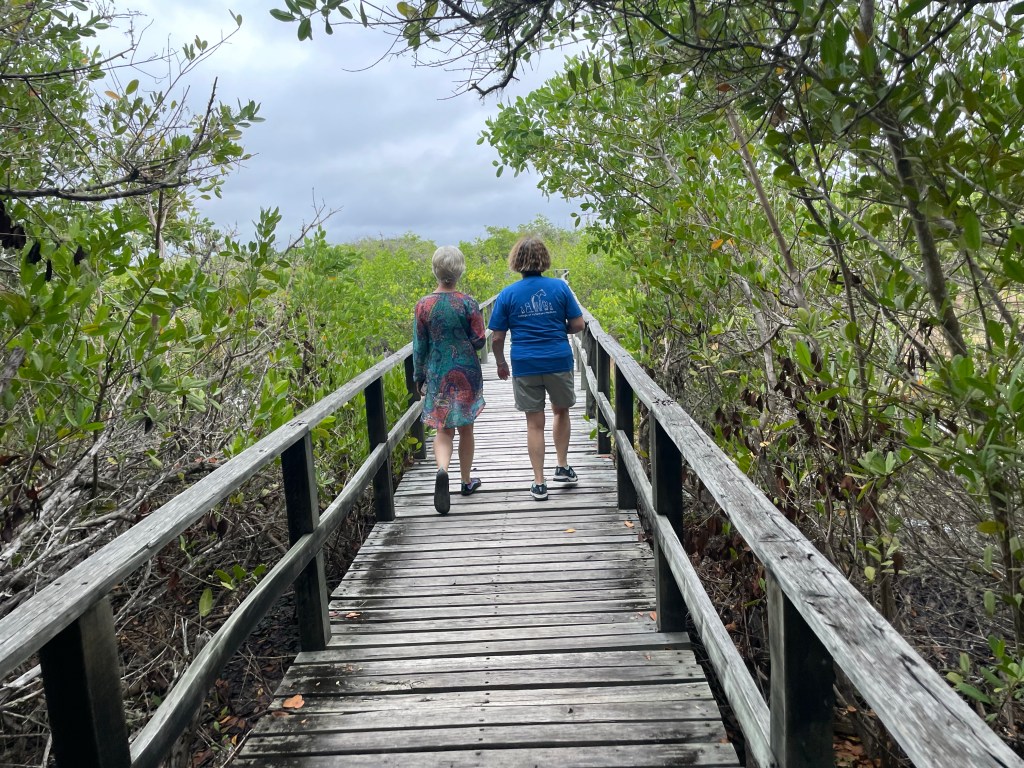
When the water goes out while you have laundry in and ends up delayed by two hours it turns into a late night getting packed back up. I slept decently and was again up before my alarm this morning. I don’t mind one bit, I’m happy to eke out every last moment I can on Isabela. I made my tea and invited Kyra to go on a circadian walk with me to wake our bodies; it was not even 7am yet. Plus she hadn’t seen the flamingo lagoon yet. My earl gray in hand, we walked the 200 yards (give or take) to the wetlands boardwalk. Three iguanas lined it this morning, not nearly as many as my first morning. A bunch more sunned on a little island in the lagoon.
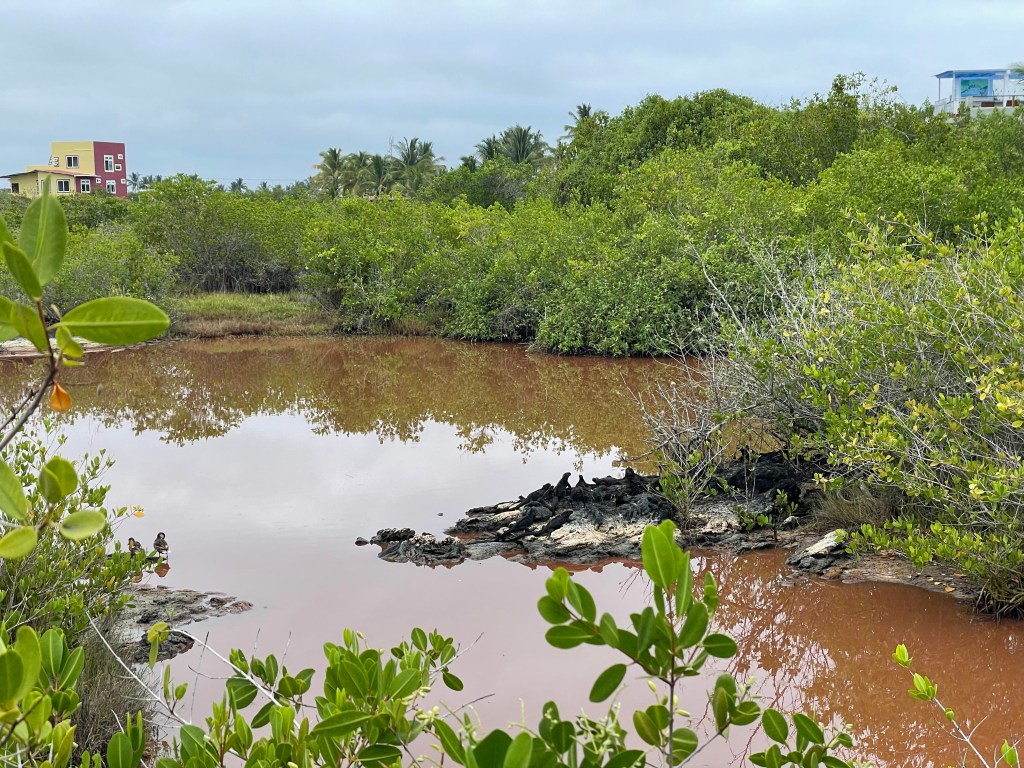
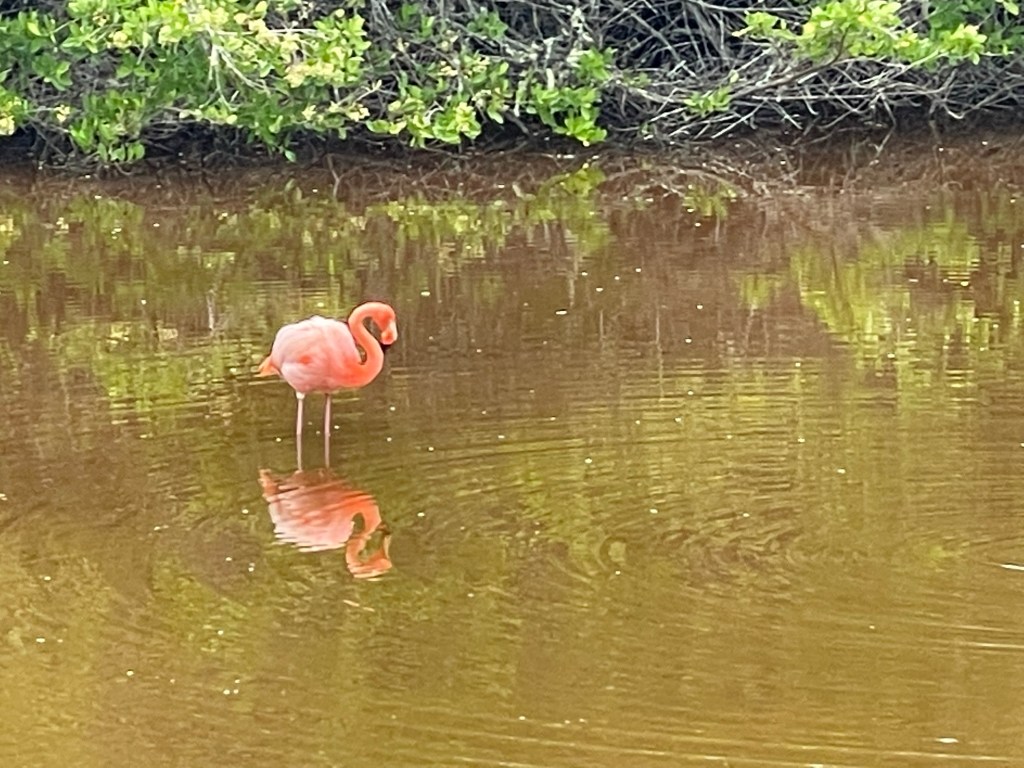
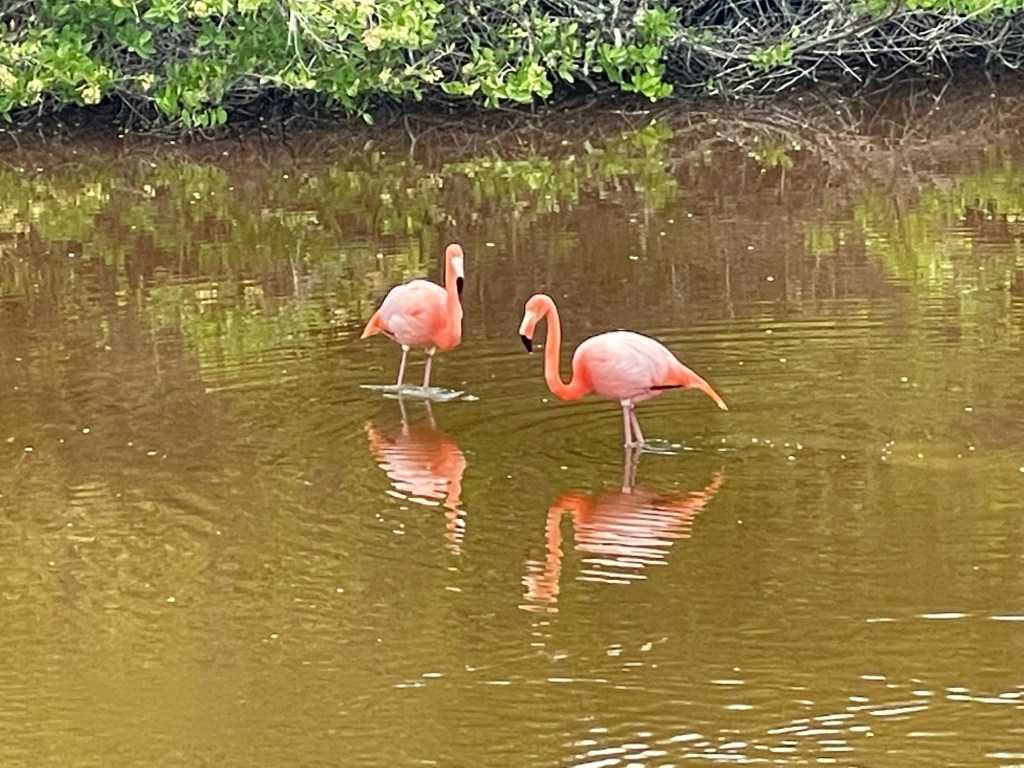
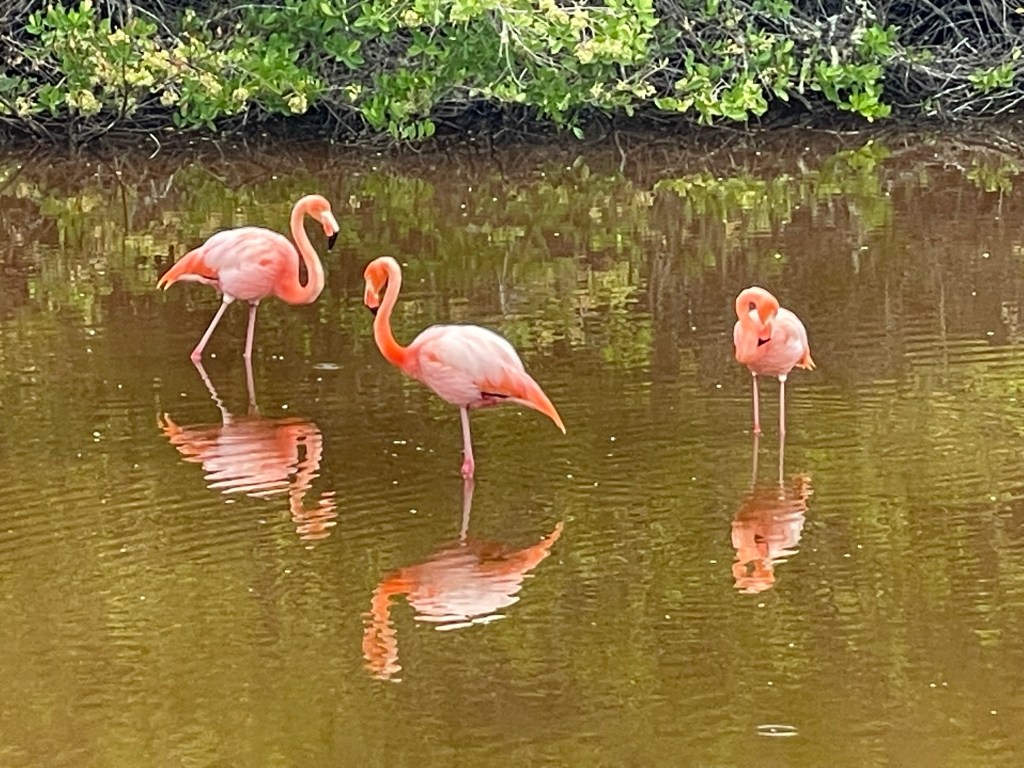
We encountered two little old ladies, they were from New Hampshire and traveling together as Joy’s husband wasn’t a traveler. It was nice that they had each other. The four of us walked slowly and quietly; excited when we rounded a bend and there stood three pink flamingos enjoying their breakfast. The little ducklings were adding to the cuteness as they swam in circles; sadly upstaged by the pink flamingoes. The stillness of the early morning, the sounds of the birds moving in the water, everyone quiet to not startle the wildlife; such a serene moment.
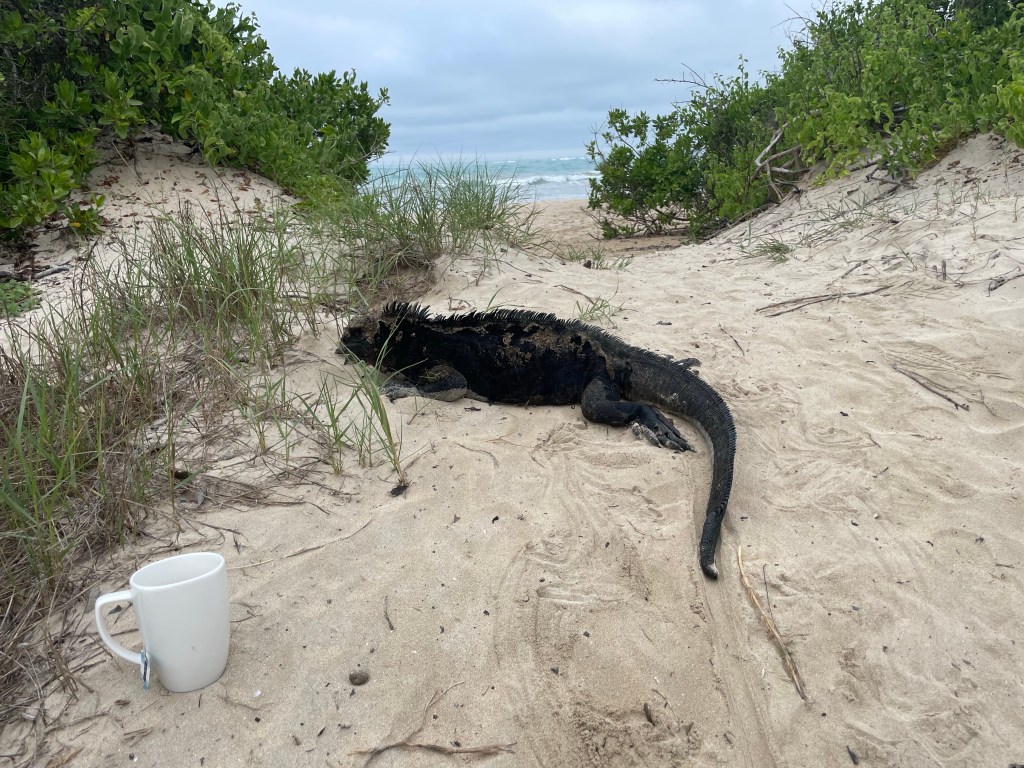
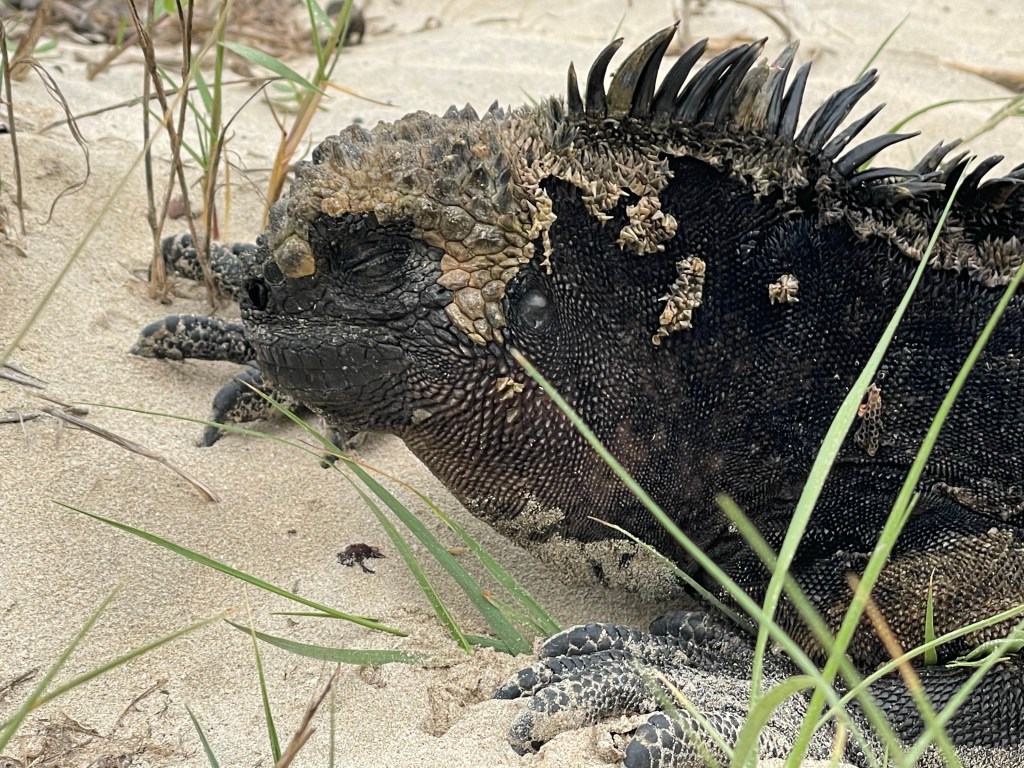
Back by the main road, a large marine iguana was sleeping on the sand across from the boardwalk. I knelt to get a picture of my last Isabela iguana friend. As I took his picture by my tea he popped his eye open and glared at me. I left him in peace, sorry that I’d interrupted his slumber.
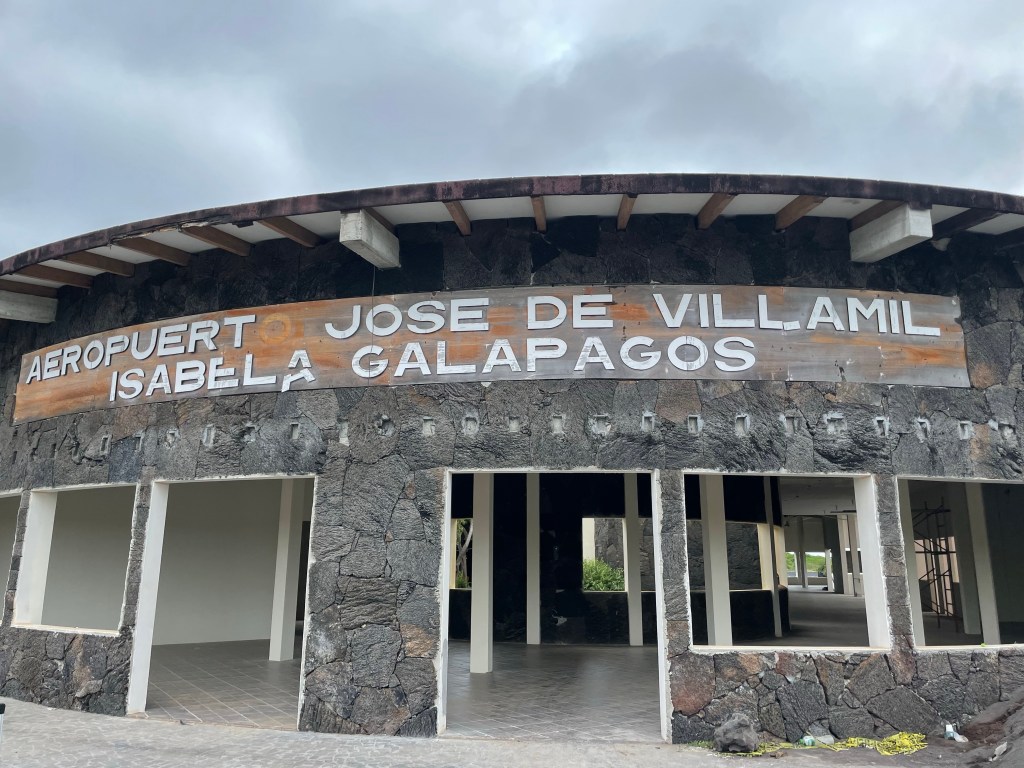
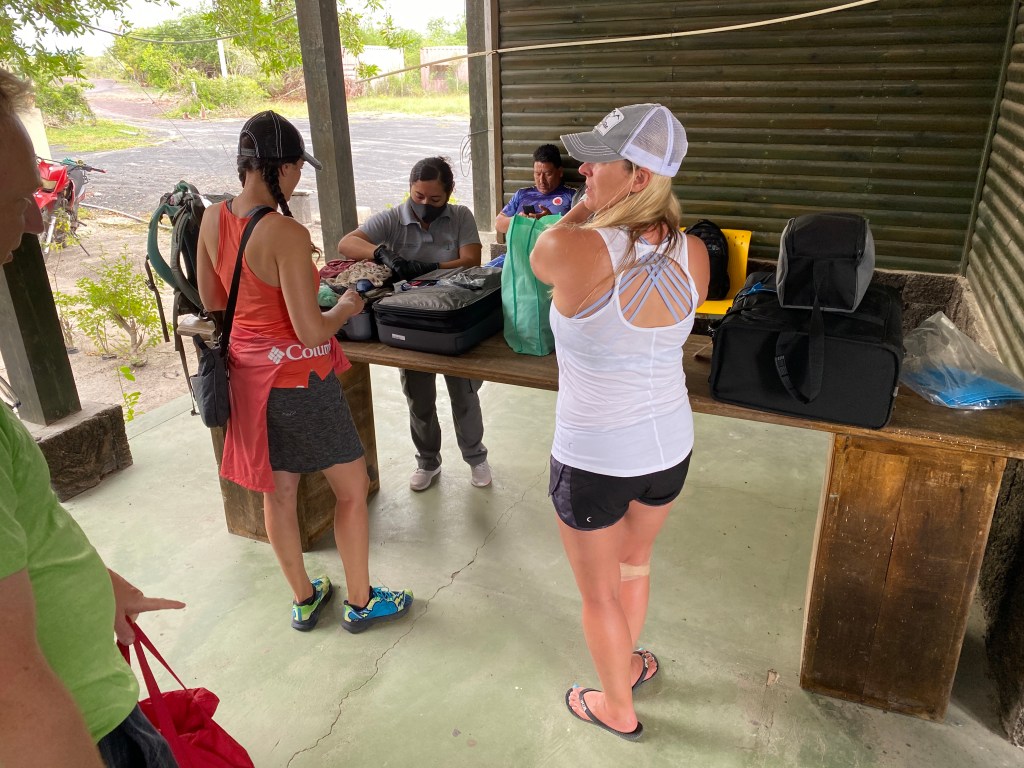
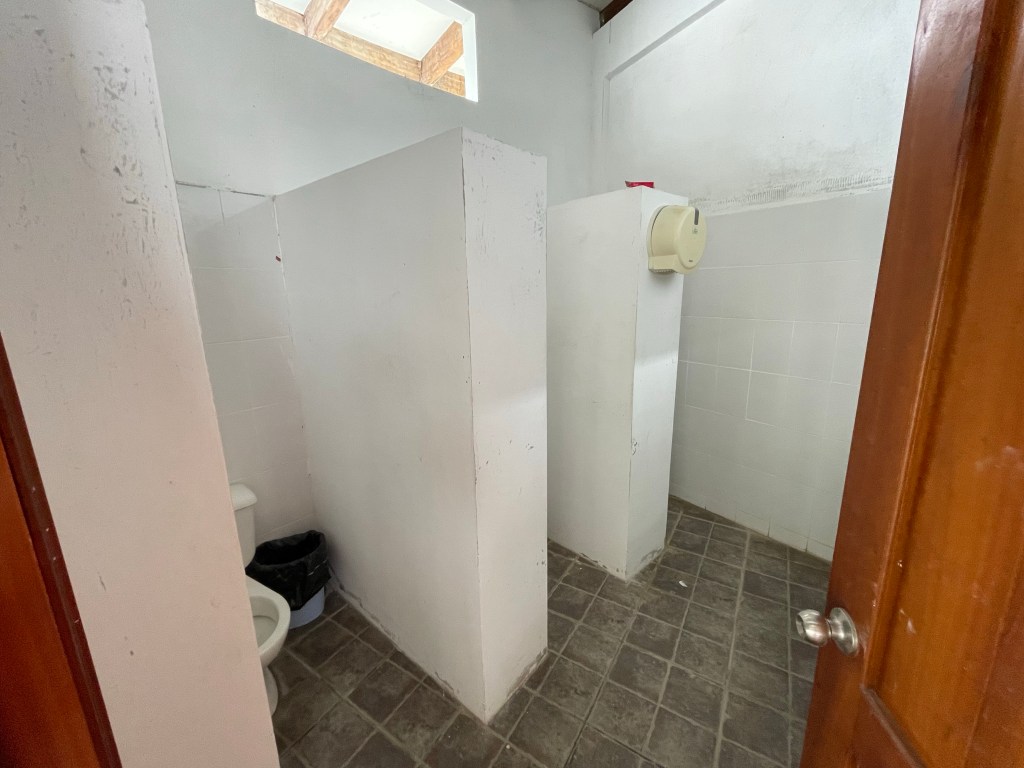
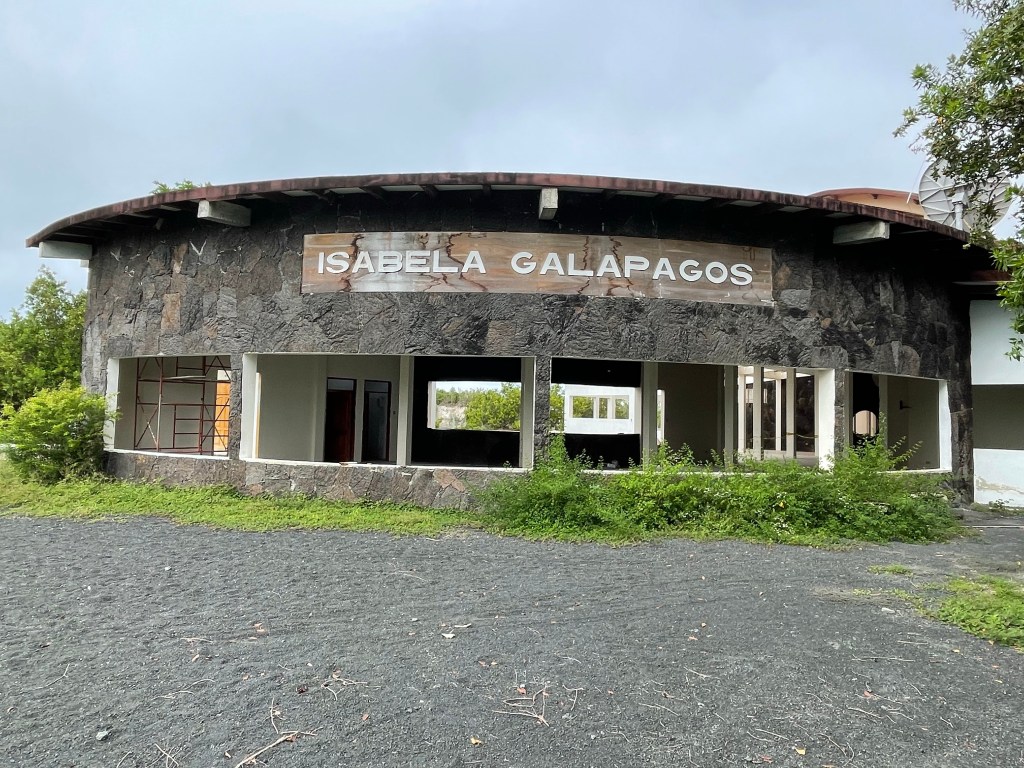
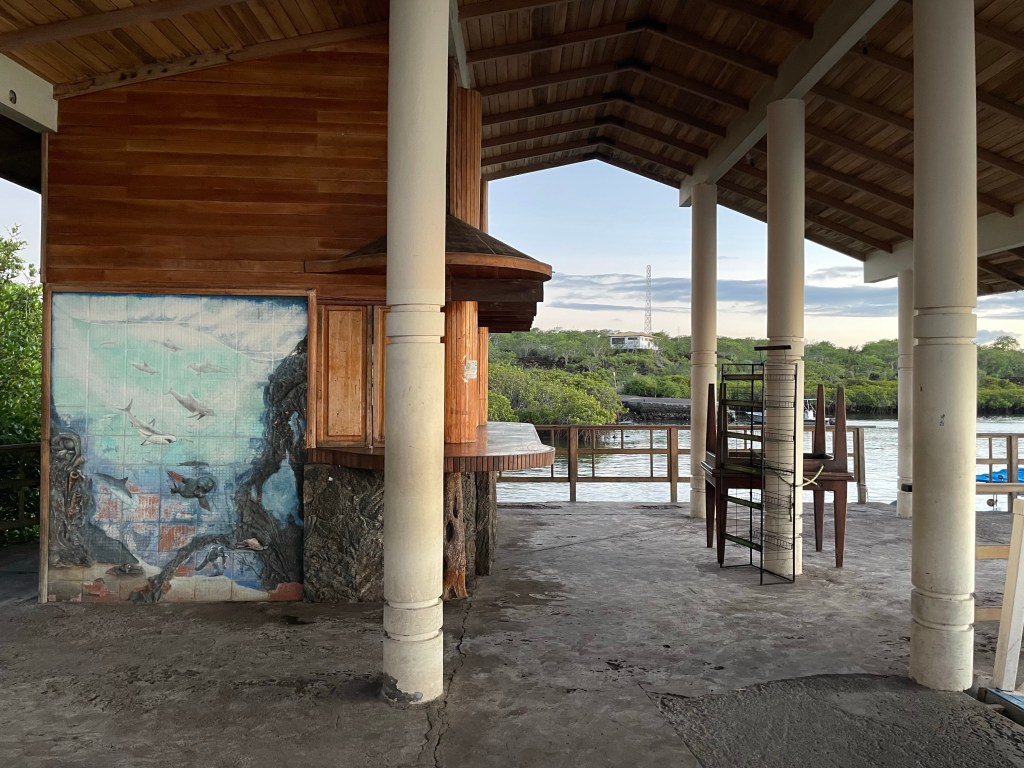
A driver arrived on time to take us to the “airport.” An empty round building in the midst of construction; it was like walking into a ghost town. The airport bathroom had neither paper, doors, nor toilet seats. Nobody was there yet but us. Eventually a young man arrived, lifted a rolling metal door to reveal a scale and weighed our luggage to confirm we were within our allotted weights. A few minutes later a lady arrived and had us open our luggage on a stainless steel table outside to do the inspection and ensure we weren’t leaving with anything prohibited.
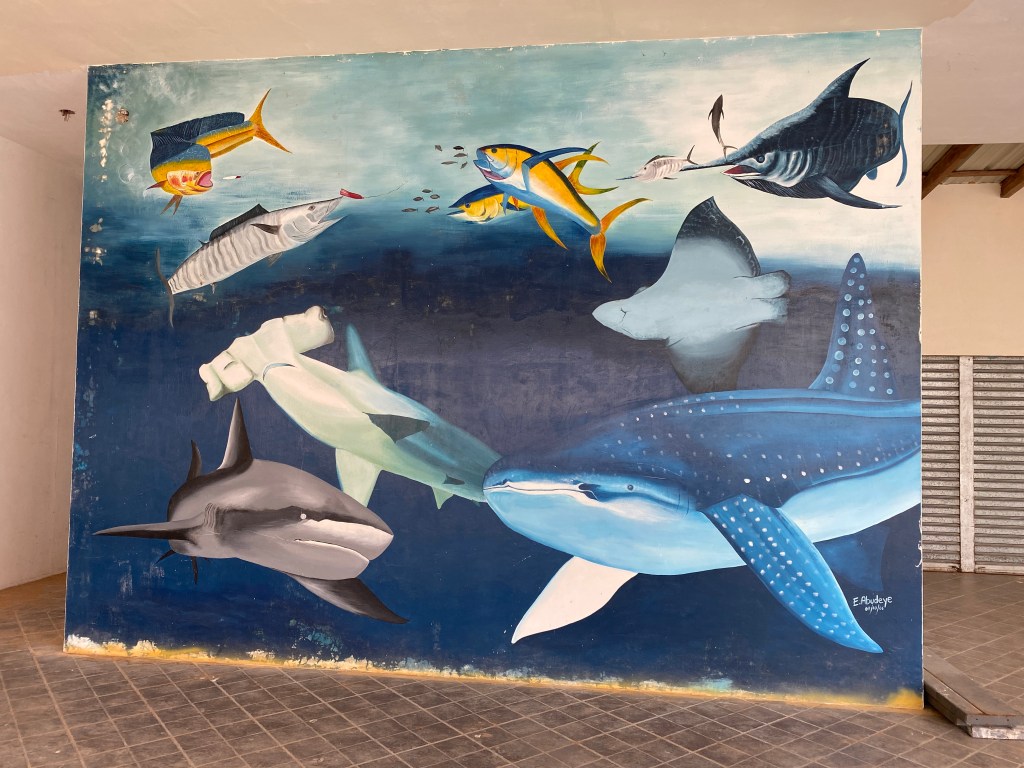
While waiting for our air taxi to arrive we chatted with a couple that had just done a week-long diving trip through the islands, they showed us pictures and relayed their stories. A local was with them, in charge of getting them to the airport and seeing them off safely. In discussing our itinerary with him he told us that one night in Puerto Ayora was plenty; they pandered too much to the tourists there.
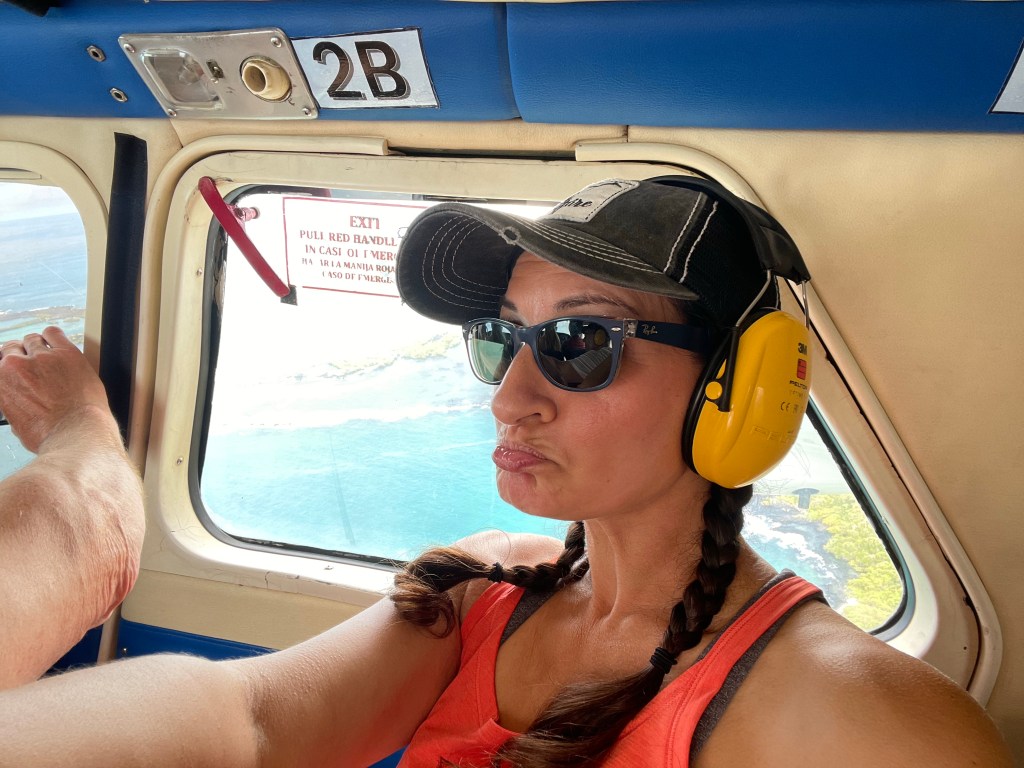
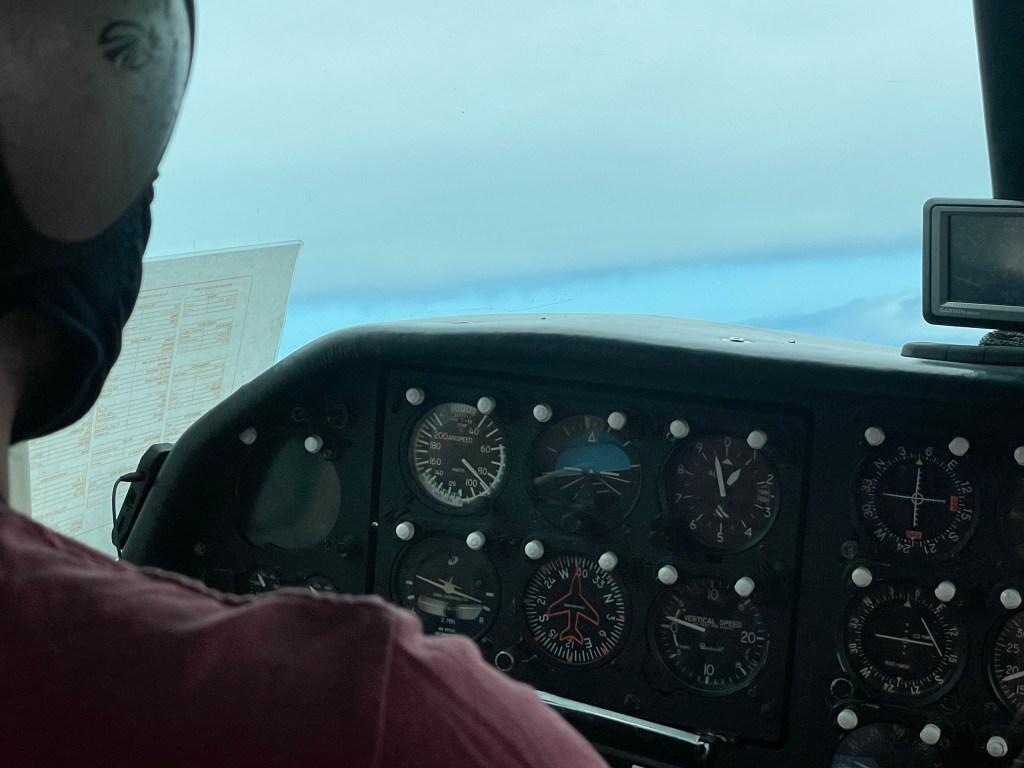
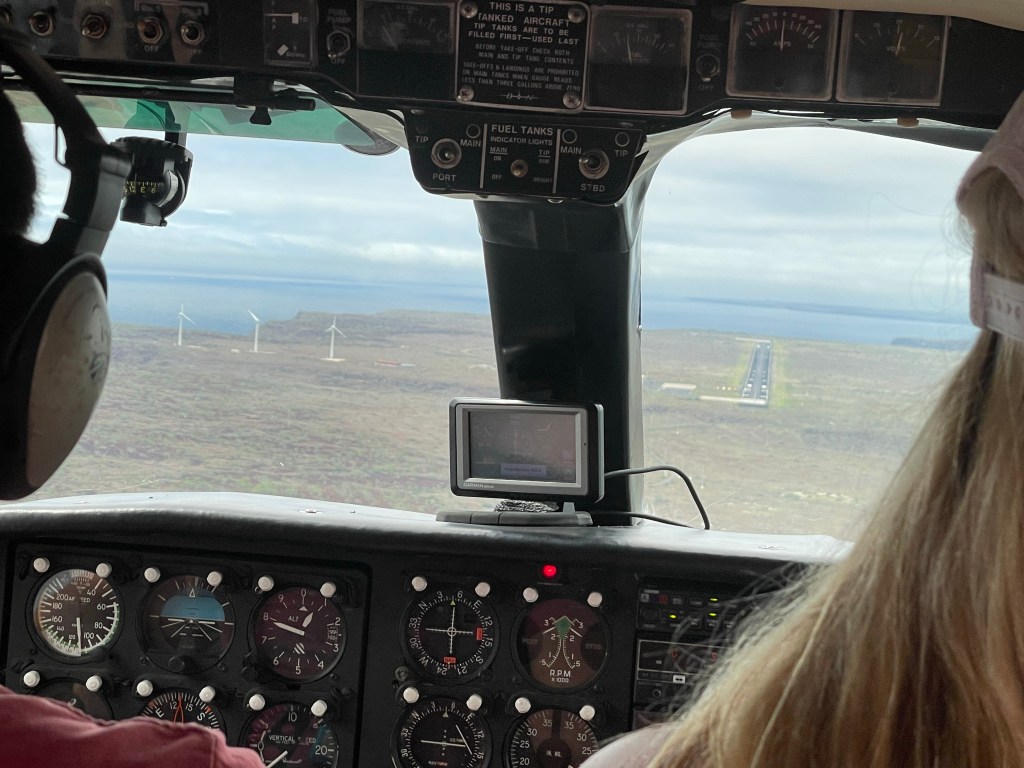
Our little Emetebe air taxi arrived and we were almost immediately led onto the air strip; all seven of us who would be taking this flight. Kyra had the co pilot seat today. The pilot was the same as when I arrived on Isabela and I’m pretty sure they only had one pilot and one plane. When I flew in he had been dressed as an actual pilot; today he wore jeans and a t-shirt. We would be flying at 3,500’. I guess the extra 1,000′ he flew at to get here warranted looking the part?
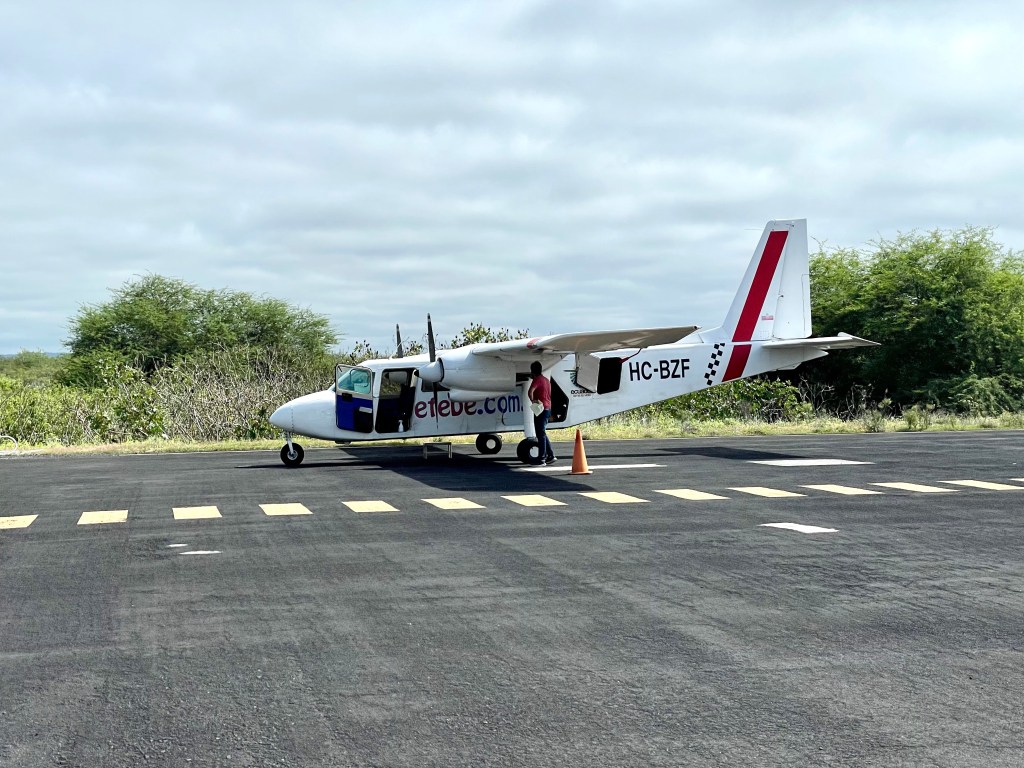
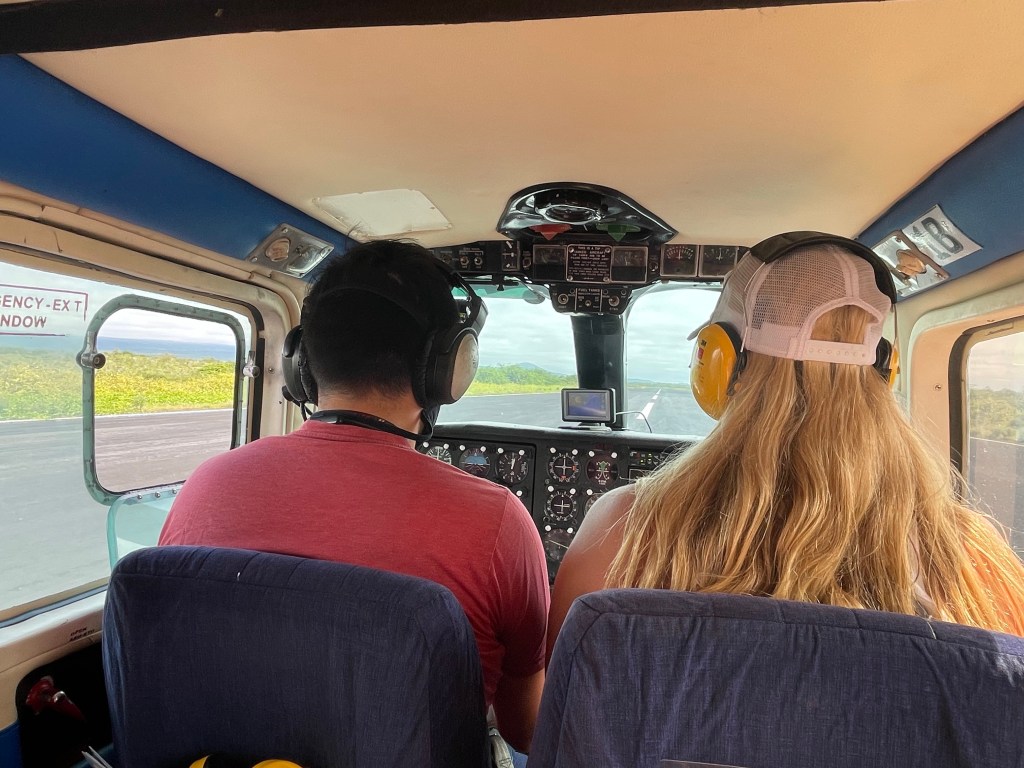
As the little air taxi ascended into the sky we flew over Tintoreas and I waved goodbye to my adorable baby sea lion. I should have put it in my pocket and taken it with! I saw the narrow channel where I snorkeled over a dozen or so white tip reef sharks. I was as sad to leave Isabela as I was to leave the baby sea lions. I really wish I’d had at least one more full day here but that’s ok, I will be back some day.
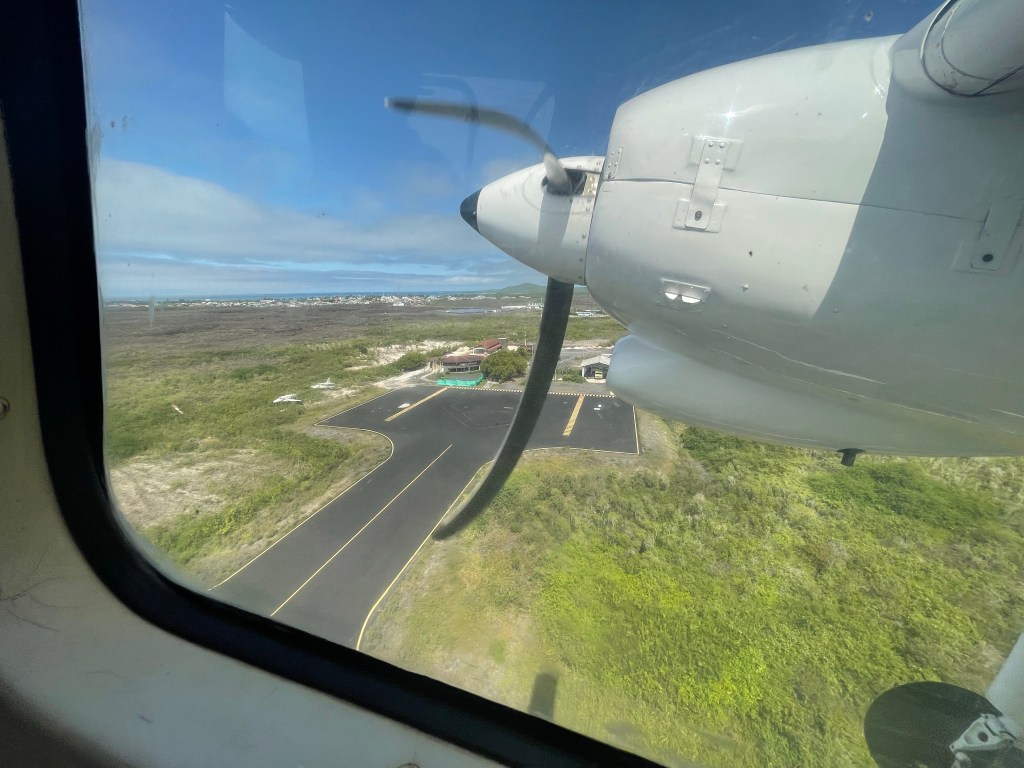
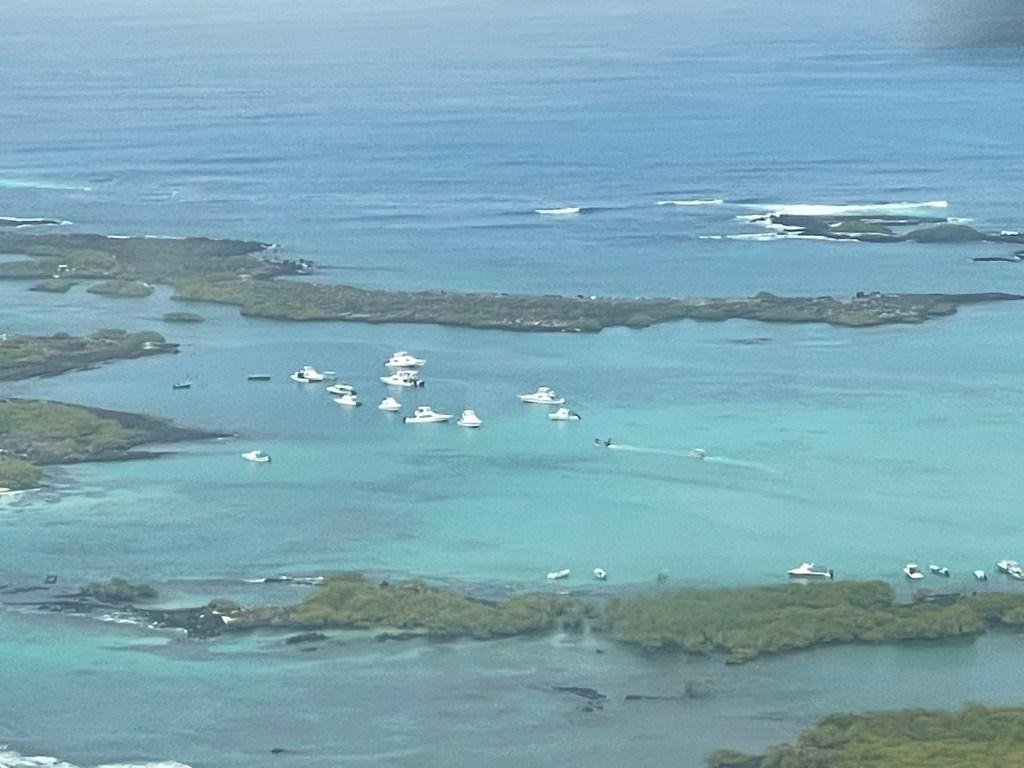
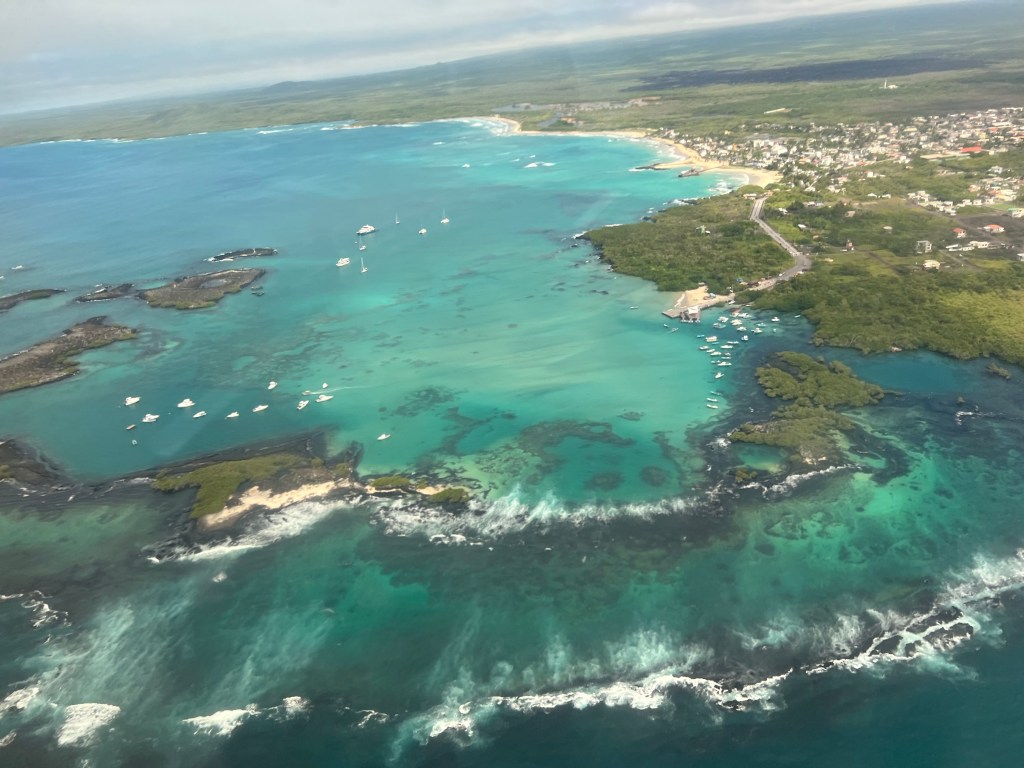
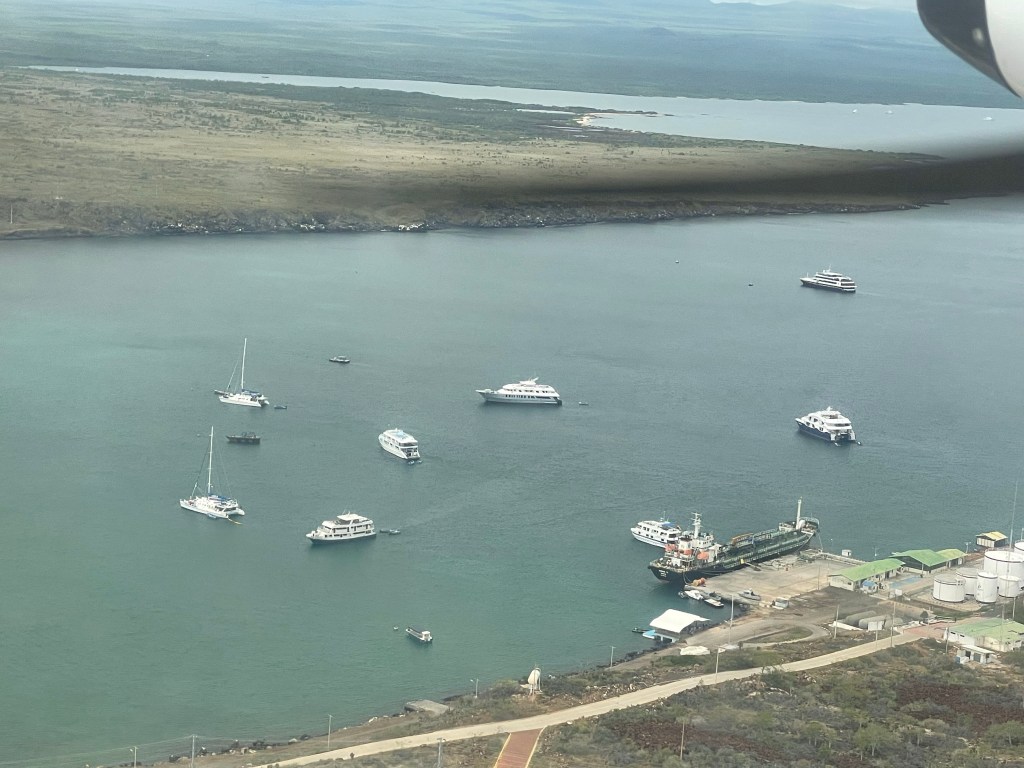
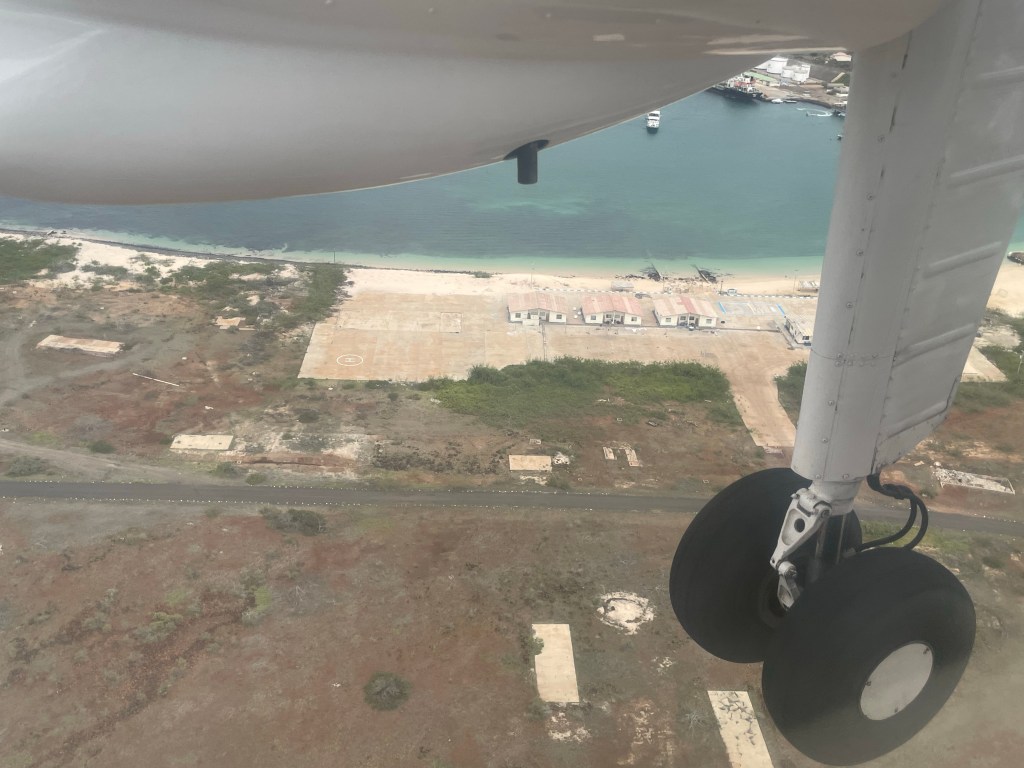
Yachts came into view as the little plane descended on Baltra. Which were the Corals?! Which one would I be on?! Clearly headed for the runway, the pilot turned the little air taxi away and began to circle. The runway was a single lane road and a larger jet was causing confusion, initially indicating a delay and then swiftly deciding they were ready to take off. On a regular flight it drives me crazy when passengers applaud upon landing; on the teeny air taxi an applause was well deserved.
The Coral guides were waiting for us at the airport. Andreas greeted us and informed us that we would be on Coral I. The Corals are a pair of twin yachts that travel in tandem so we had no idea if we’d be assigned to Coral I or II upon booking. Our journey would begin with a five-ish minute bus ride to the dock, followed by a five minute ferry ride across to Santa Cruz Island, then we would get on a 40 minute bus ride across Santa Cruz down to the town of Puerto Ayora. There we would have lunch at a nice restaurant while we met our fellow passengers, tour the Darwin Research Center, and have time to wander around town for a bit before busing back up to the dock where zodiacs (pangas) would take us to the yacht, where our luggage would be waiting for us.
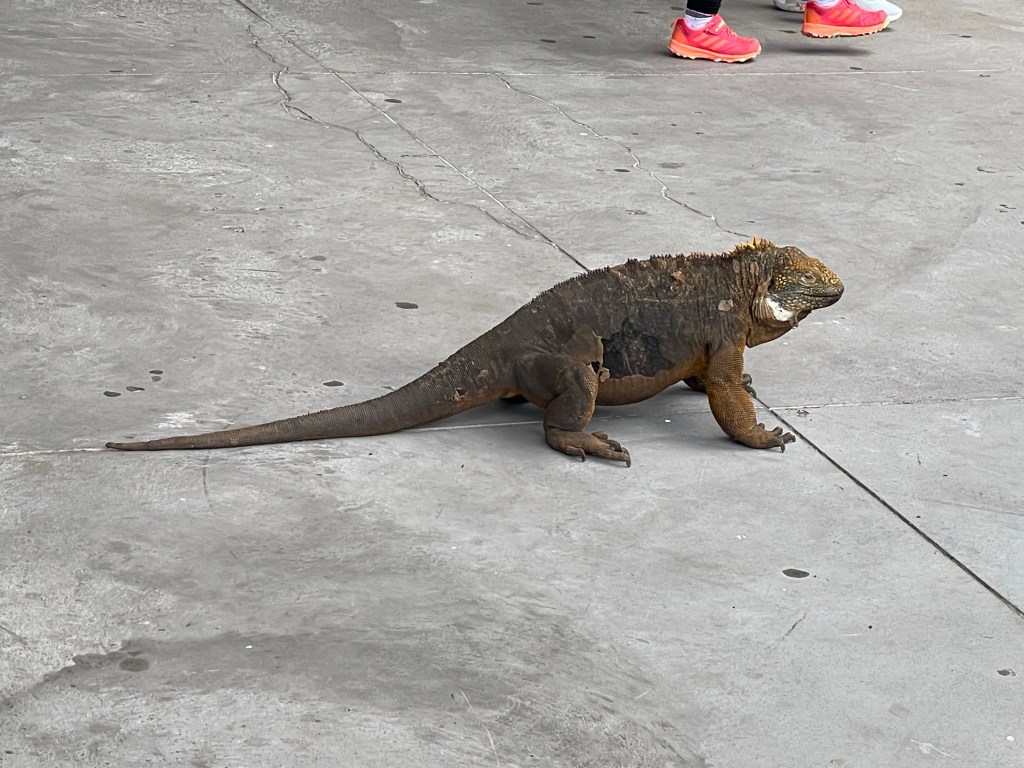
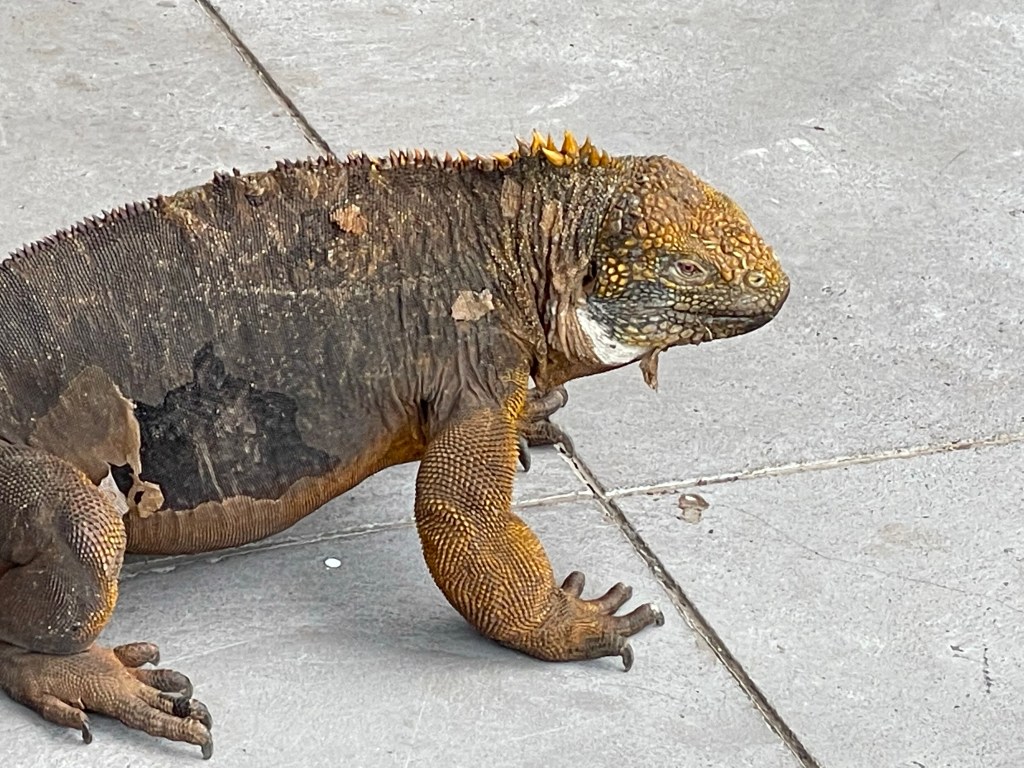
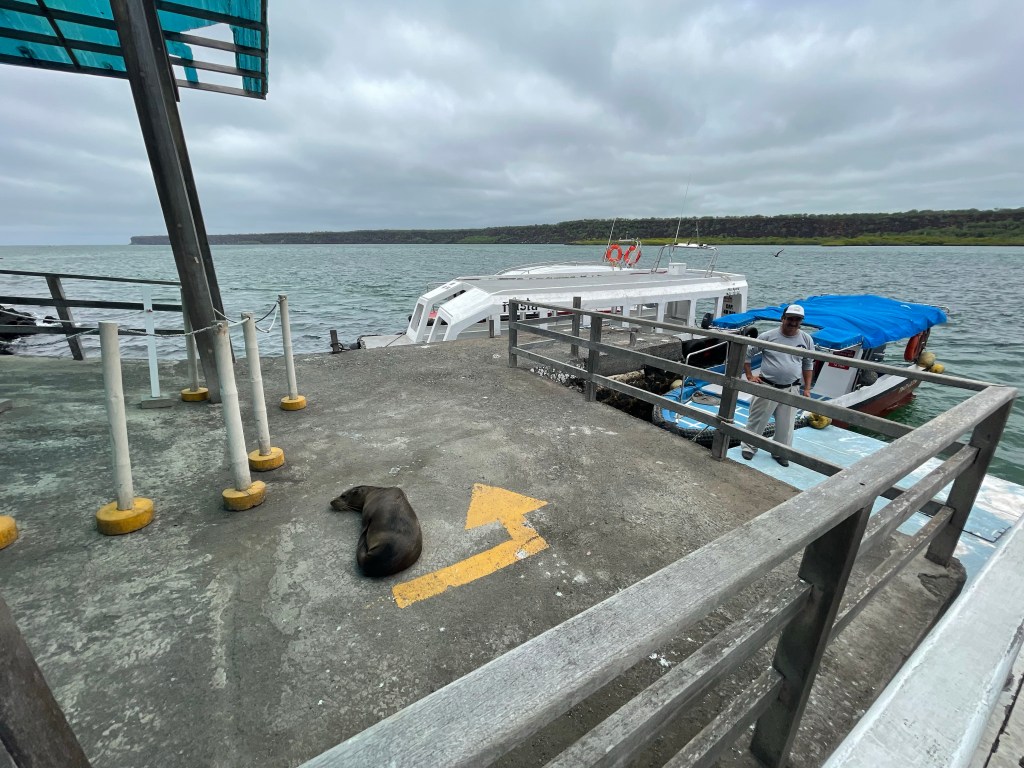
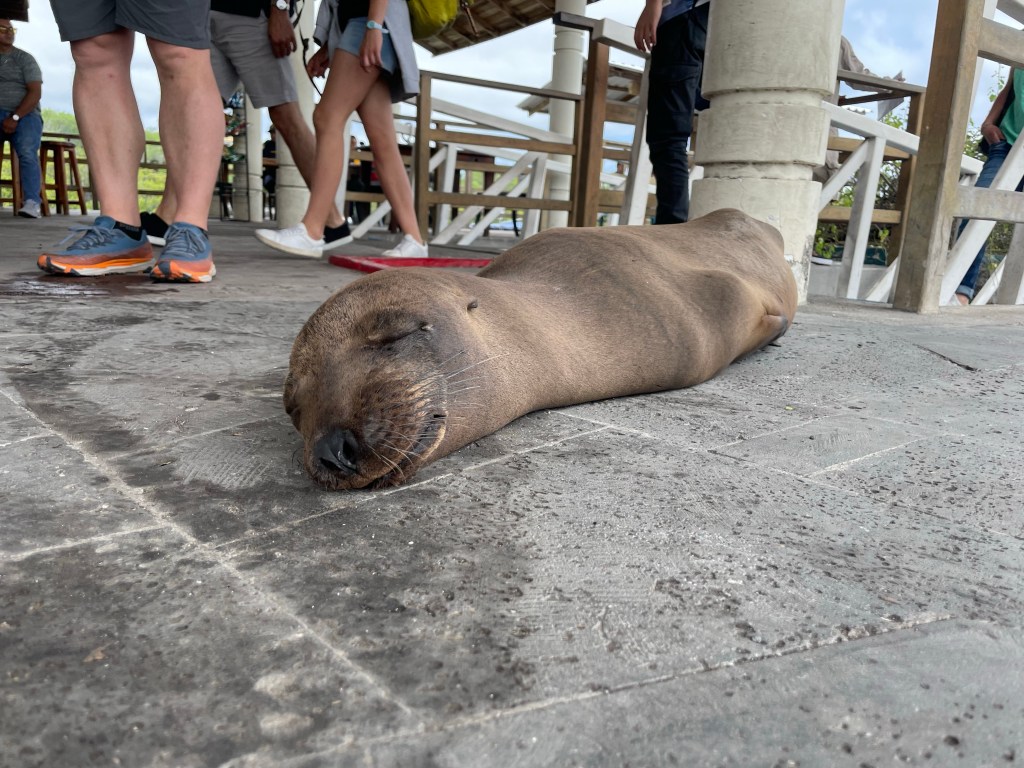
Boarding the bus at the airport a large iguana cut us off, looking at us like we should clear his path so he could continue on. I pointed his tail out to Kyra, see, more rounded since he’s a land iguana vs the rudder tail of a marine iguana. I was pretty proud and happy that I could recognize the differences thanks to the Darwin book I’ve been reading, The Voyage of the Beagle. His book has also provided me with context on the history of the giant tortoises. On the little dock on Baltra, a baby sea lion rested on the pavement. Wasn’t he cold? Didn’t he need a snuggle?
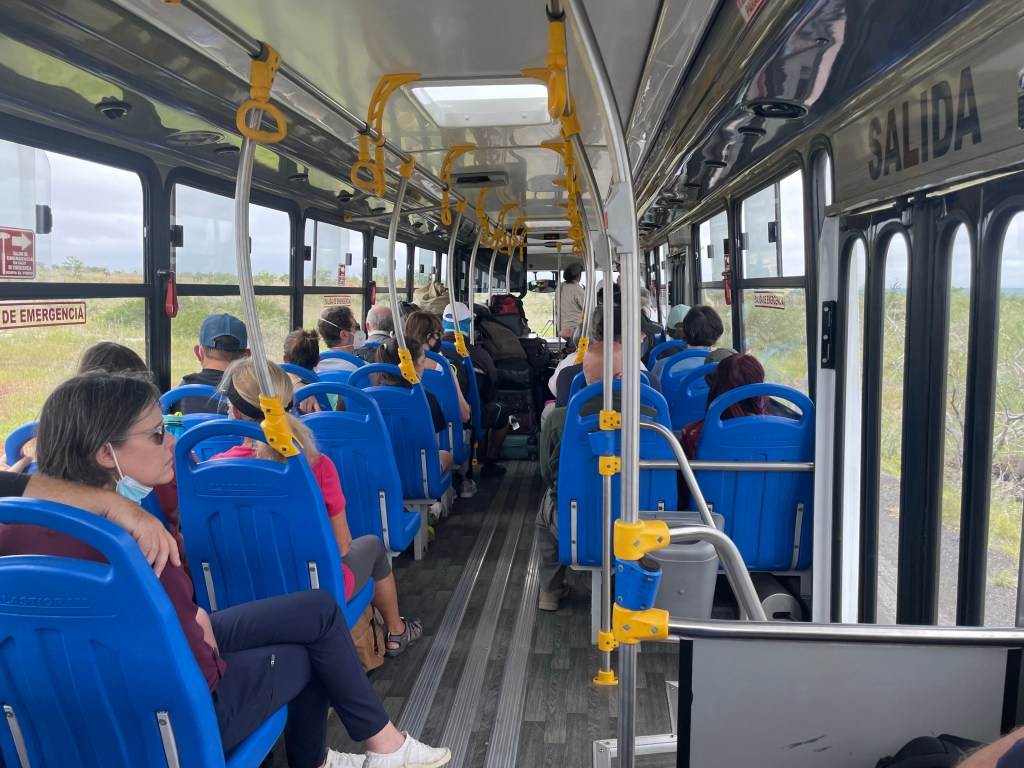
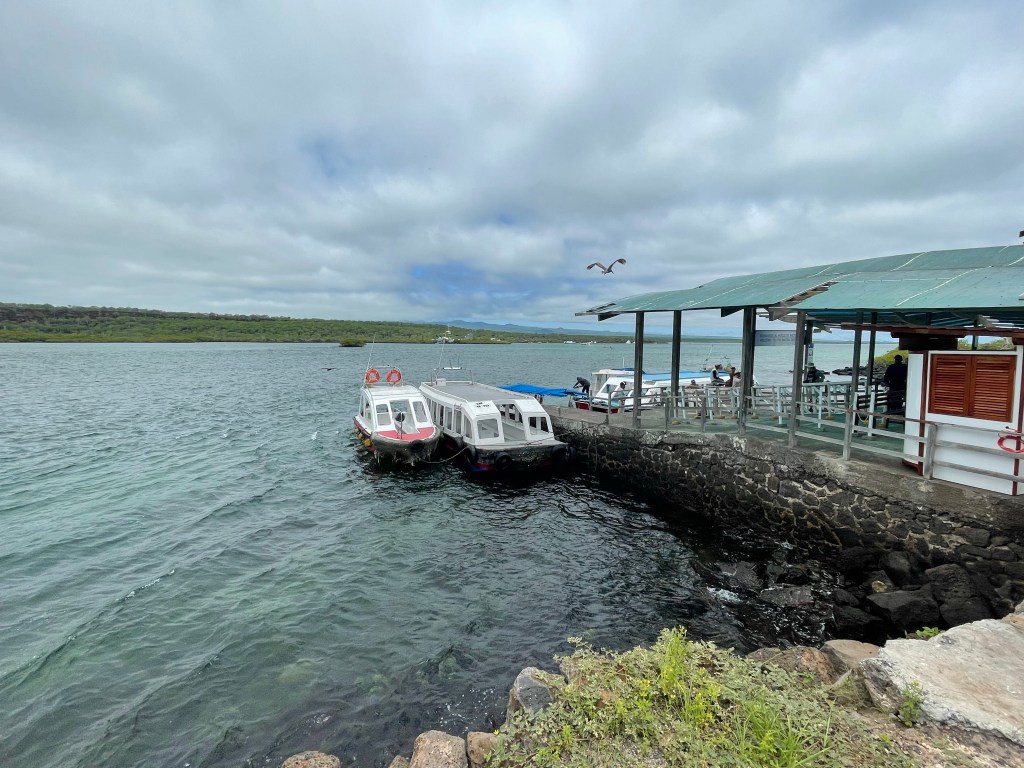
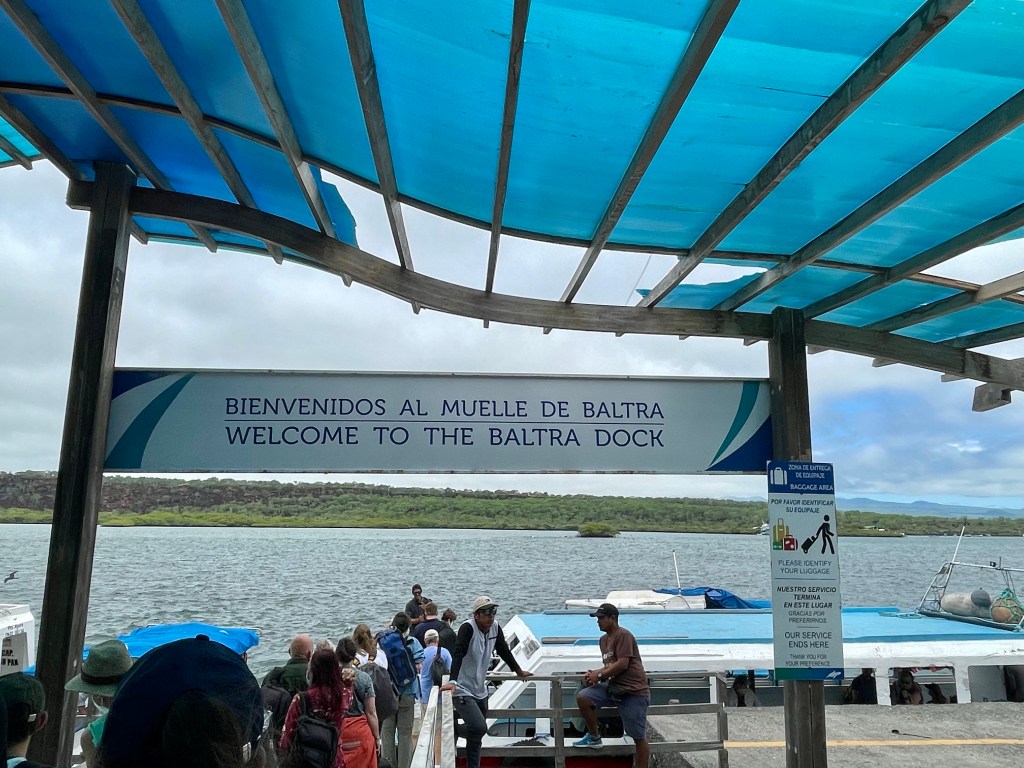
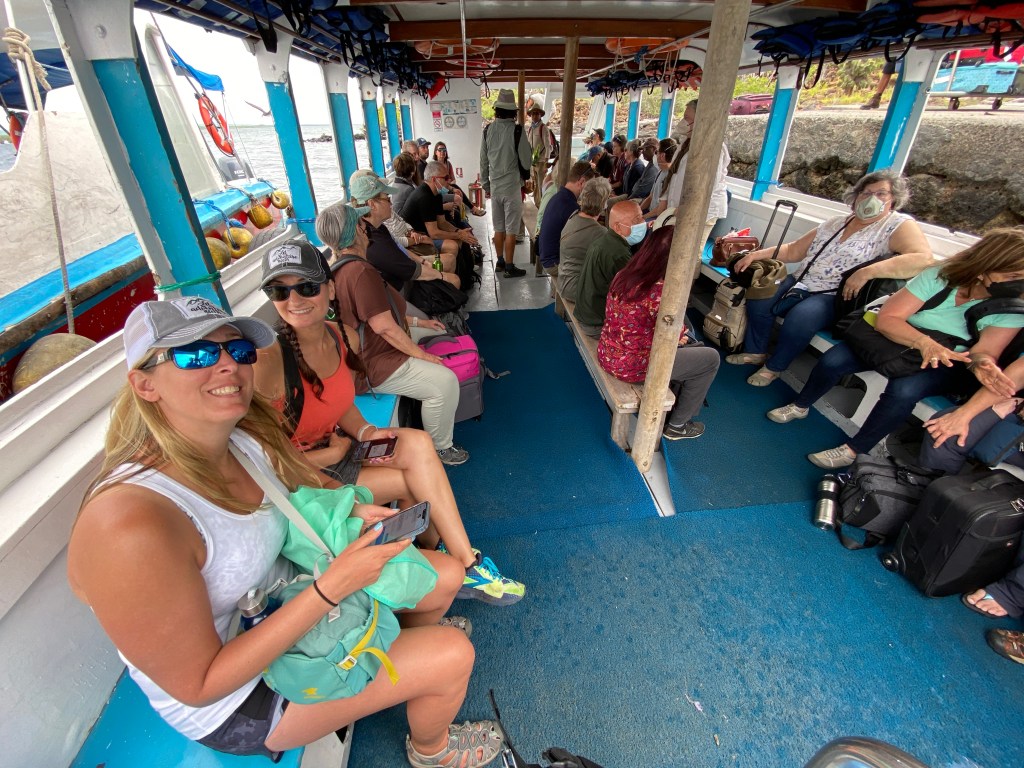
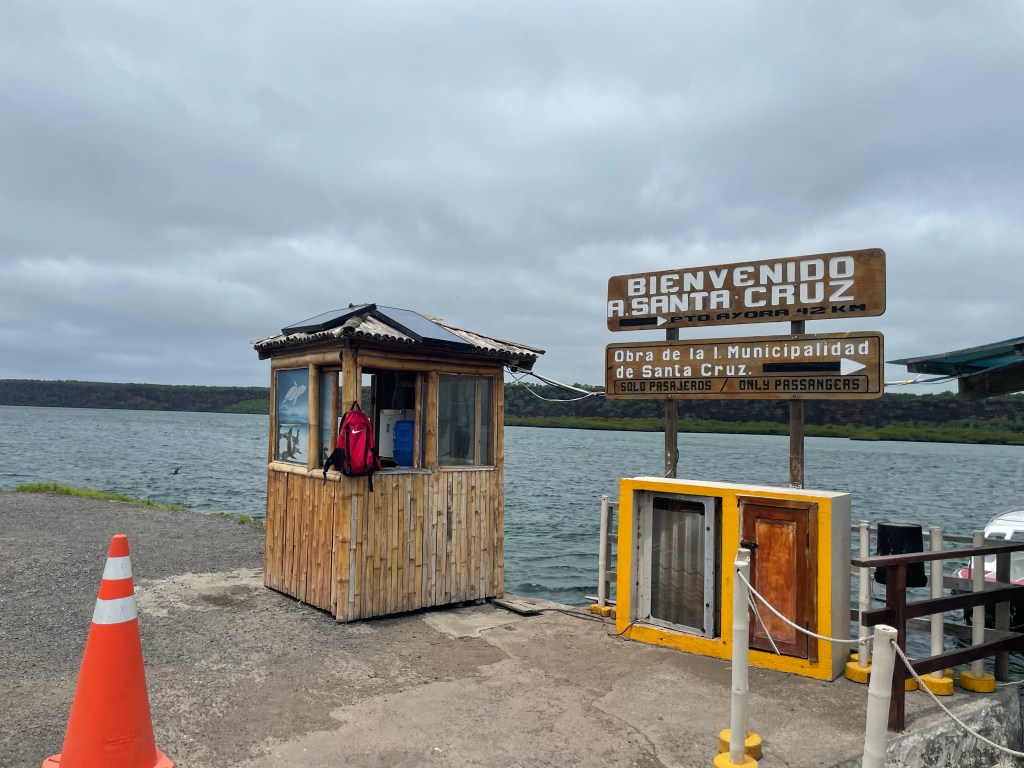
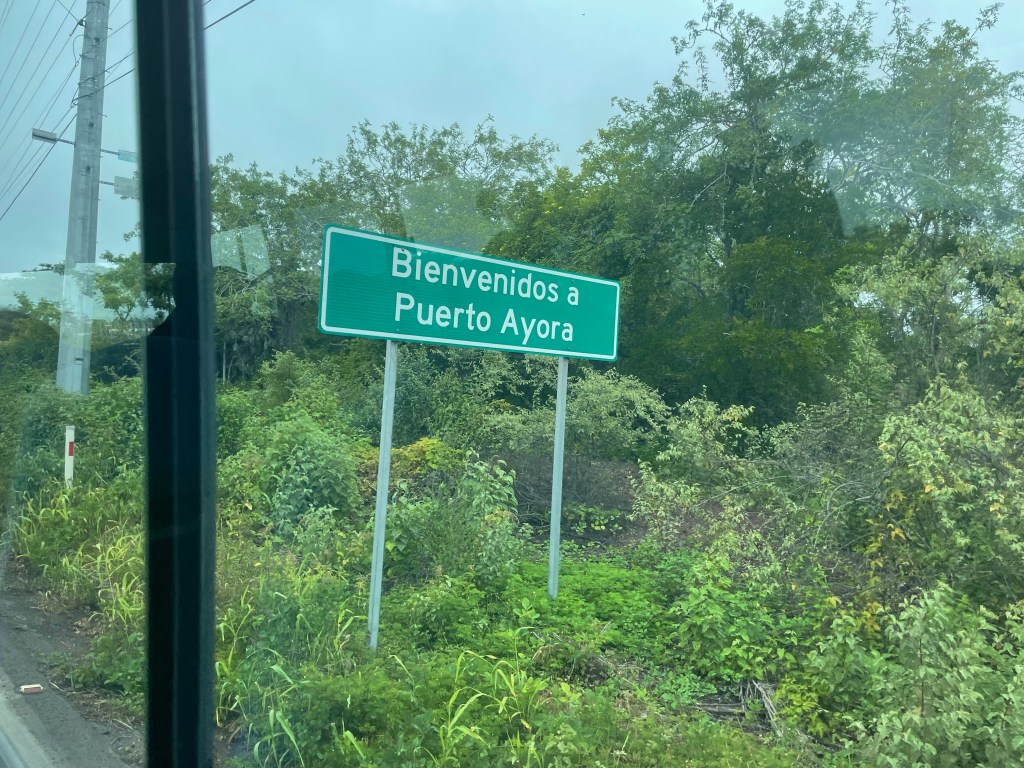
We were on a private bus and headed to Puerto Ayora by noon. Our guide, Andreas gave us a plethora of facts and information during the drive to town. Only four of the 13 Galápagos Islands were inhabited. Santa Cruz was the second largest island and most populated; with Puerto Ayora having around 30,000 residents. Of the Galápagos land mass, 97% of it is protected National Park and only 3% is available for habitation. He pointed out giant magma sink holes on either side of the road but the bus didn’t stop. It would have been nice to stop and actually get to see them. I saw two giant tortoises grazing in a pasture along with cows, lucky I was looking up at the right time as the bus rolled on. In the bed of a truck ahead a poor cow looked like he was being harshly choked by how tight he was tethered to the rail, it broke my heart. I was starting to crash; the movement of the bus was lulling me to sleep and staying awake was a struggle.
We were dropped at El Muelle de Darwin restaurant and led upstairs to one long table that we’d share with our new boatmates. Coral I was the larger of the twins, with the capacity to hold 32 guests but only 22 were booked on board. I expected the guides to have everyone introduce themselves, but they didn’t so folks at the table took it upon themselves to start chatting. The first person I met was Renee, a bubbly, outgoing, chatty retired librarian from Las Cruces, New Mexico. Her husband Bruce was quieter but equally friendly. They’ve been married eight years. Per Renee, the secret is that it was the third marriage for both of them. To my left was a quartet of friends traveling together; two couples that have been friends since their kids were in the same kindergarten class 17 years ago. Mark (K) is a retired pilot who spent most of his career flying around the world with UPS. His wife, Amy worked for Susan, a physical therapist who just sold her private practice to a larger group. Susan’s husband Marc (C) declared himself the token black man on the boat and was hilarious. They hailed from Louisville, KY. This was a fun group.
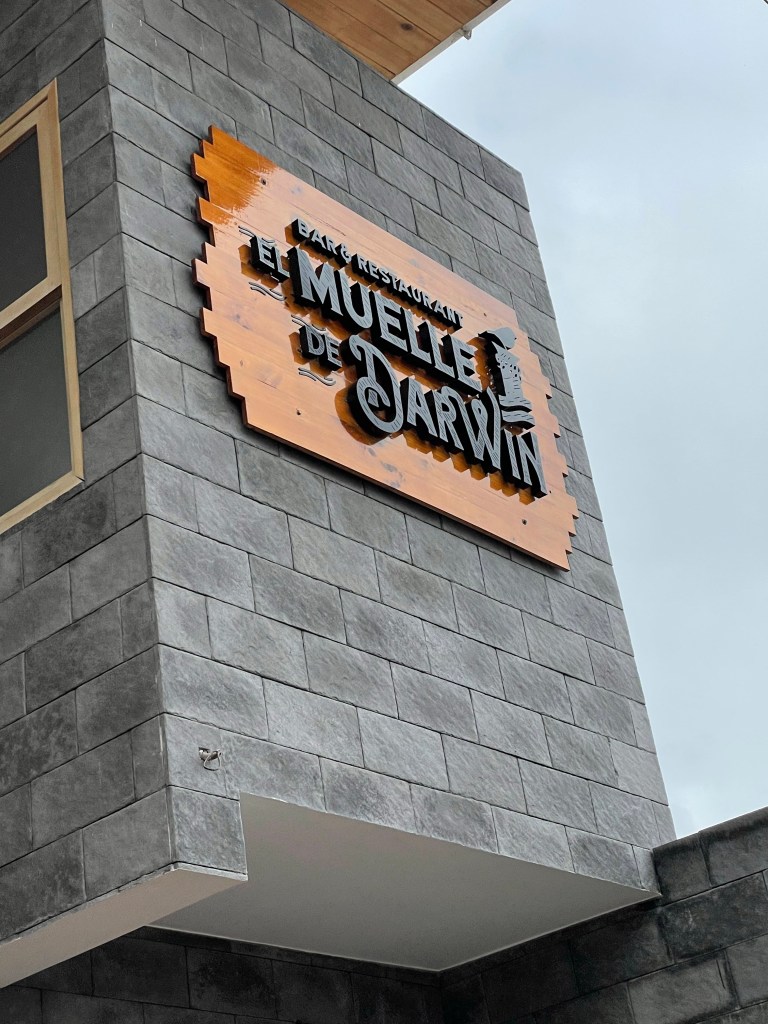
The rest of the folks I’d get to know later but included Linda, who was retired and split her time between somewhere I can’t remember in Colorado and Marco Island, FL, her daughter Audra and Audra’s friend Adam; they both live around Cincinnati, OH. At the other end of the table was Andrea, a sweet Columbian woman, her husband Andreas (yah, that’s not confusing at all – to make it even worse one of our guides is also an Andreas) and their two children, Sofia and Camilo. I can’t say for sure but I think they were about 12 and 10 years old, respectively. The Coral II group was seated at the table next to us and we all easily declared that this was definitely the fun boat in comparison! Everyone had a great time chatting and getting to know one another. The food was delicious; I had chosen the Cesar salad, swordfish, and fruit plate. I enjoyed my meal with both a delicious cucumber cocktail and a green detox juice; the green juice felt so refreshing in my tummy.
After lunch, Andreas (the guide, not the husband) led us on a brief walk up the road to the Darwin Research Center.
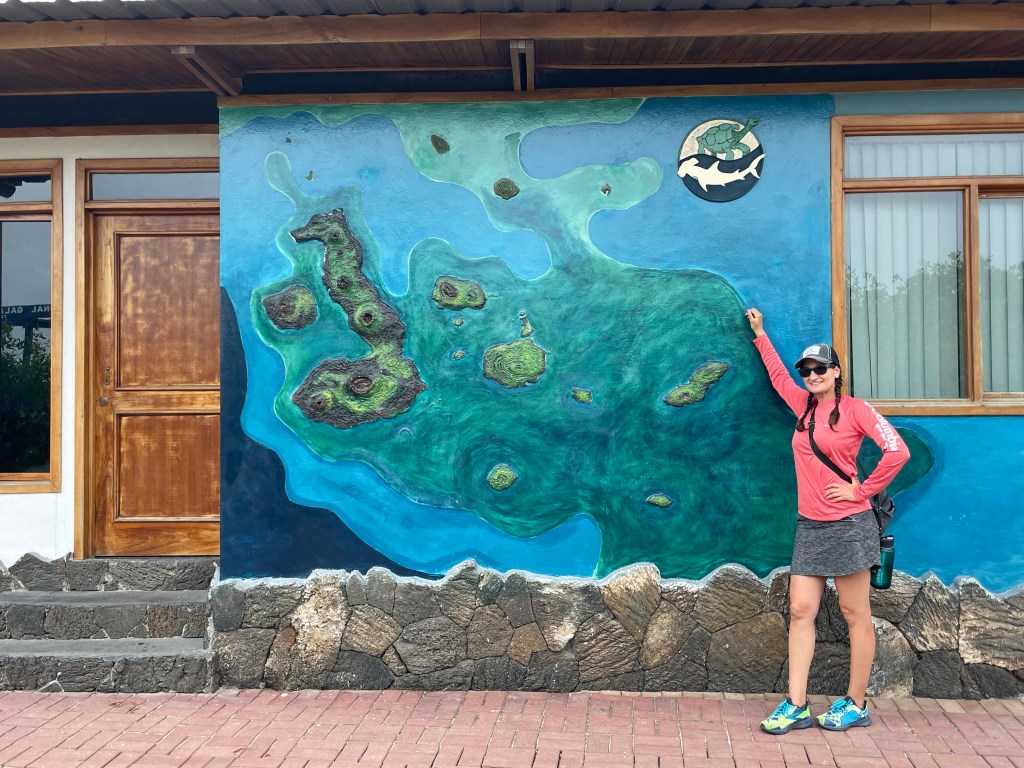
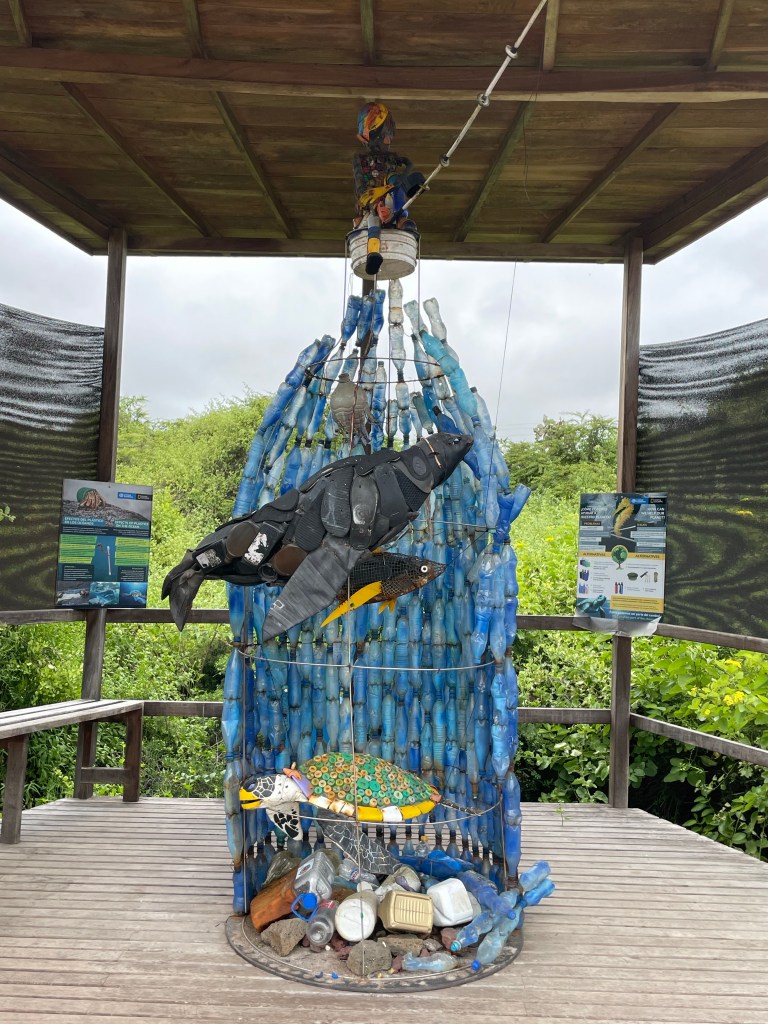
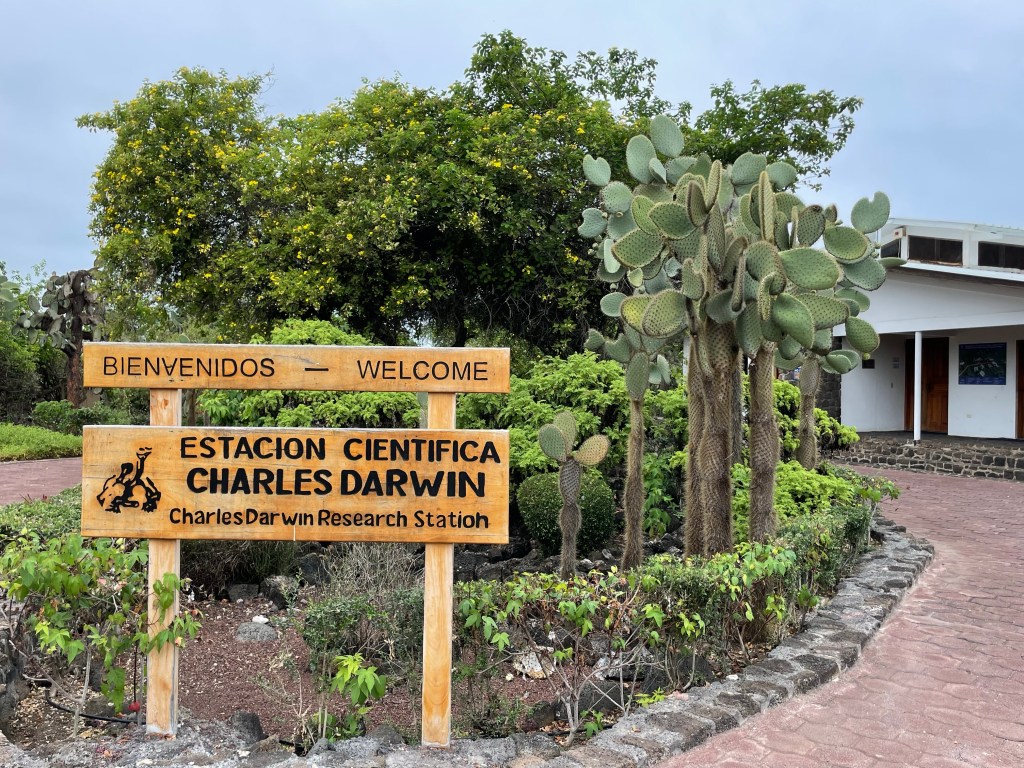
Apparently they don’t actually breed here it seems; they just collect tortoise eggs and care for them to help ensure the babies’ survival. I was really glad I had visited the breeding center on Isabela since that experience had taught me so much. And I wasn’t loving this group tour style of visiting the center. Andreas stopped along a wall of information depicting the tortoise conservation process. Benches lined the little pergola and the group piled in to sit. With no spot left I stood between two, happy to stand and not concerned but young Camilo saw me, scooted onto his dad’s lap and shooed his mother over to make room for me to sit. How could I say no to that? I don’t feel like it’s often I see that much respect coming from a child his age; kudos to his parents and to him.
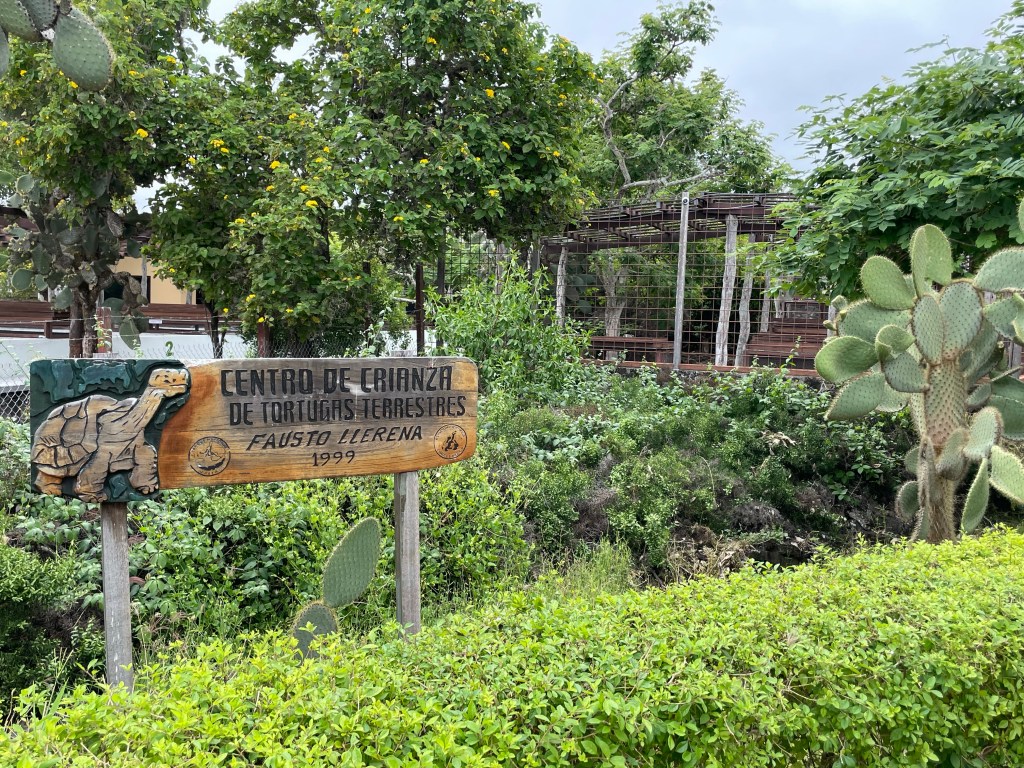
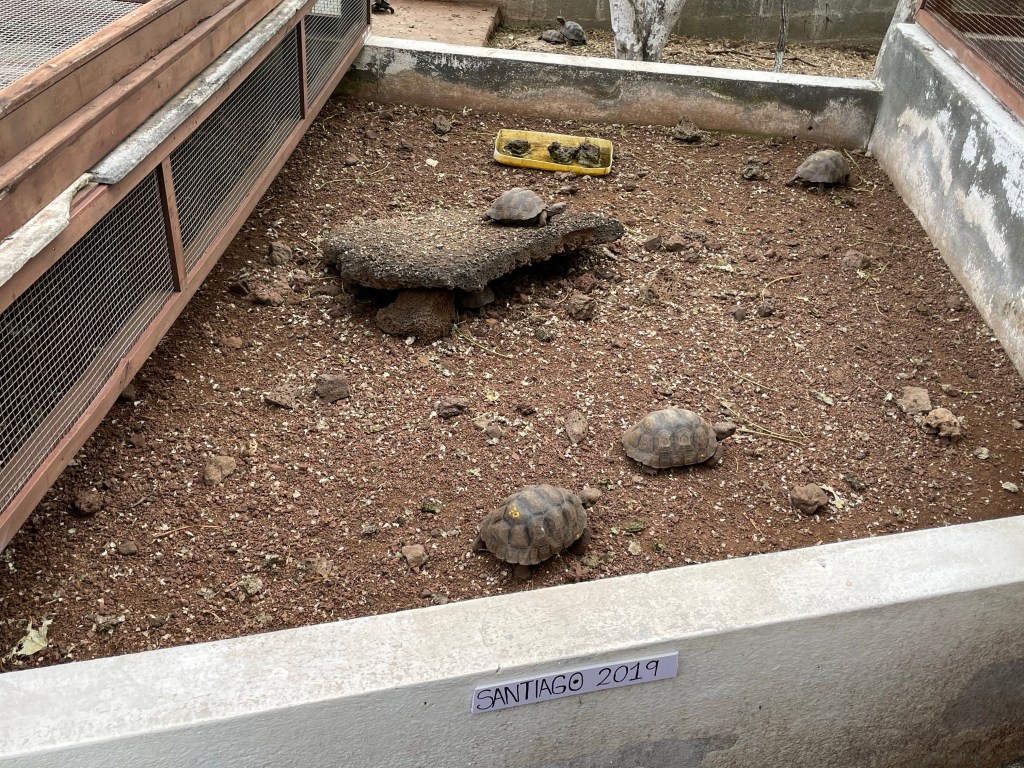
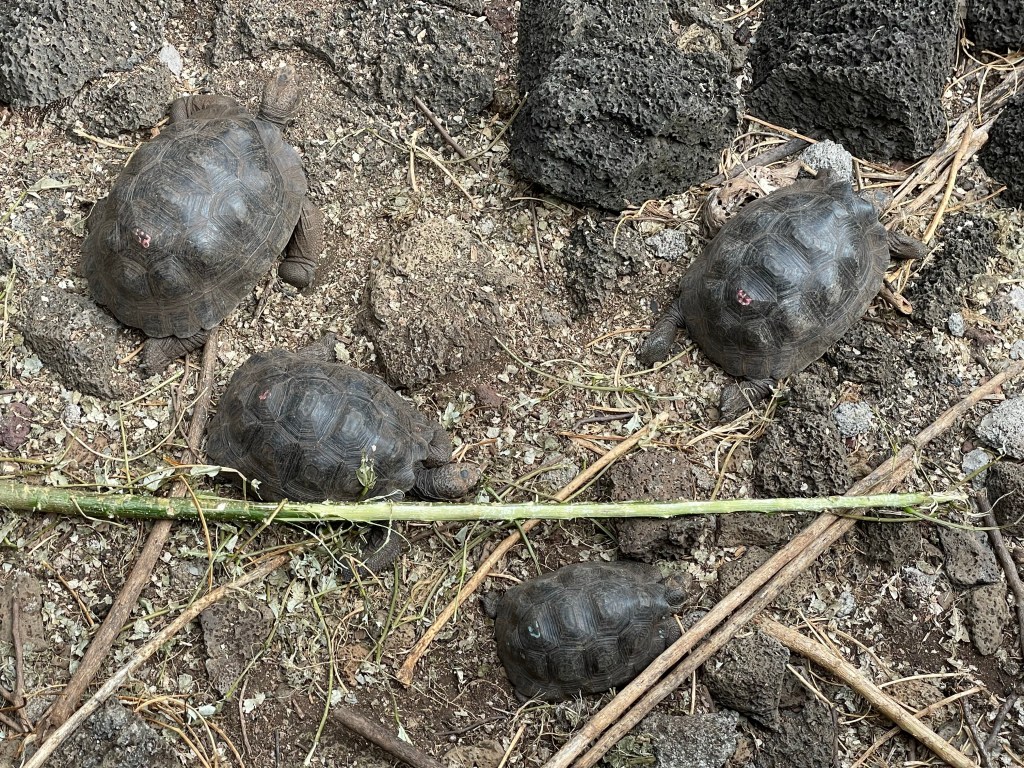
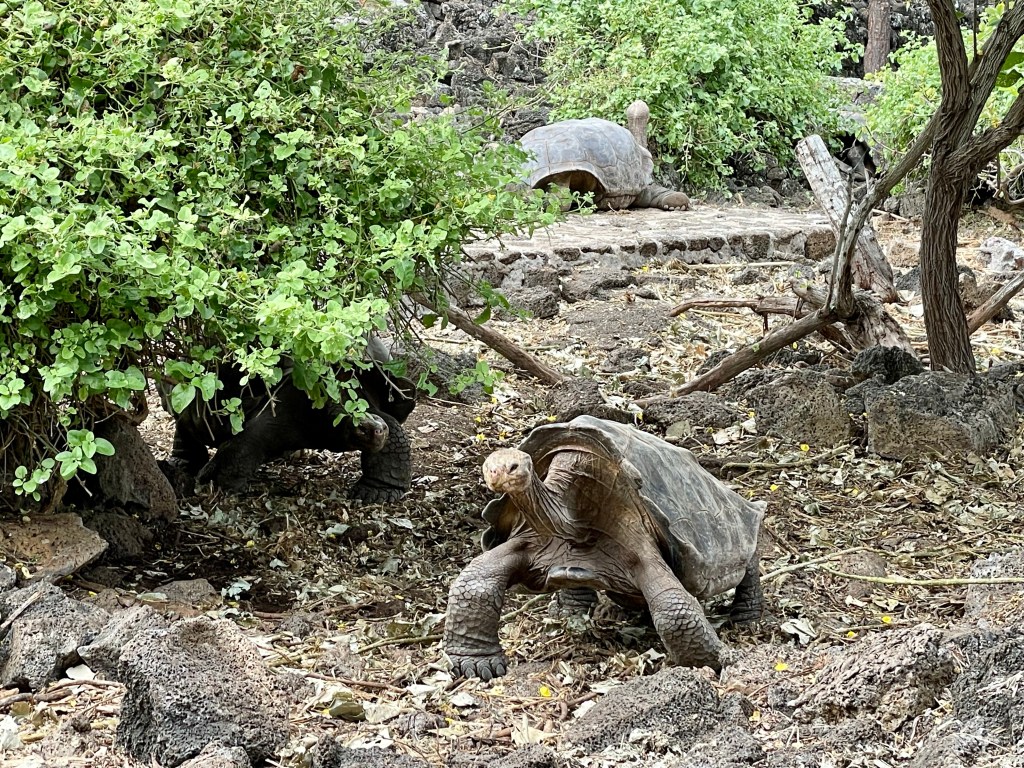
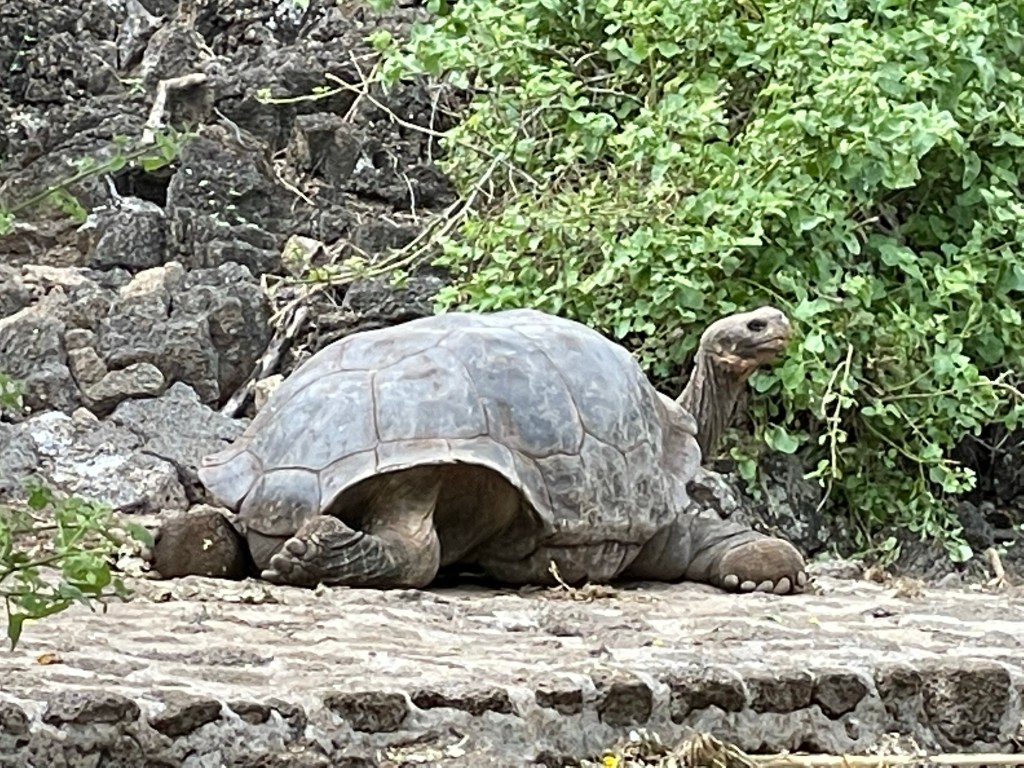
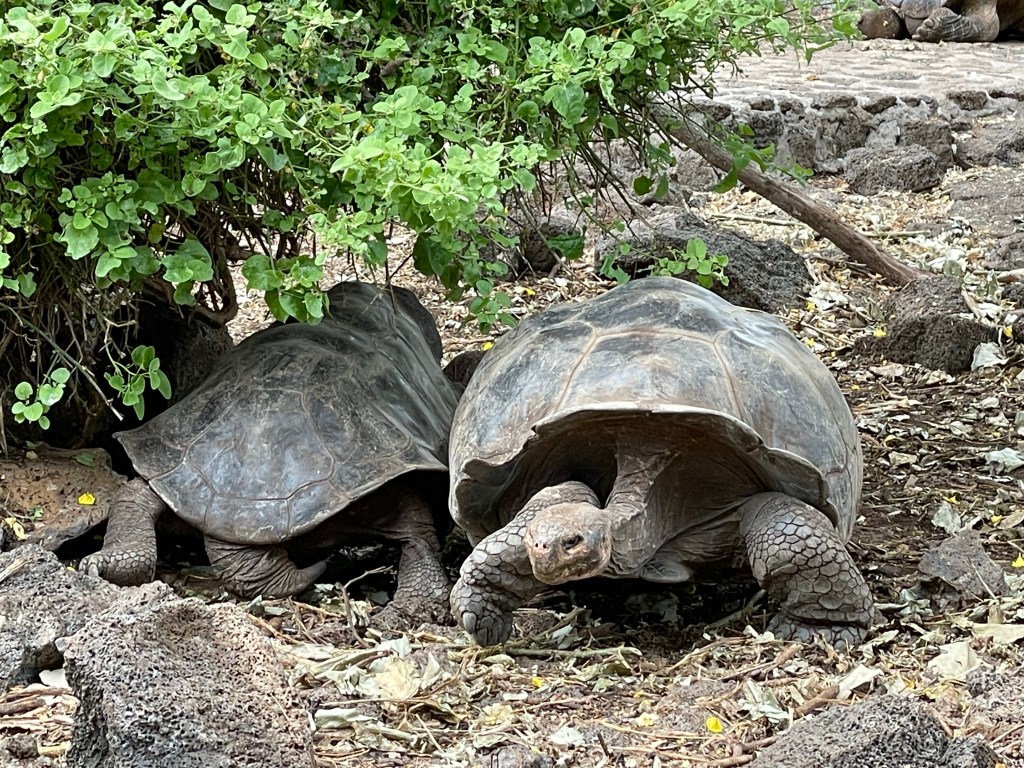
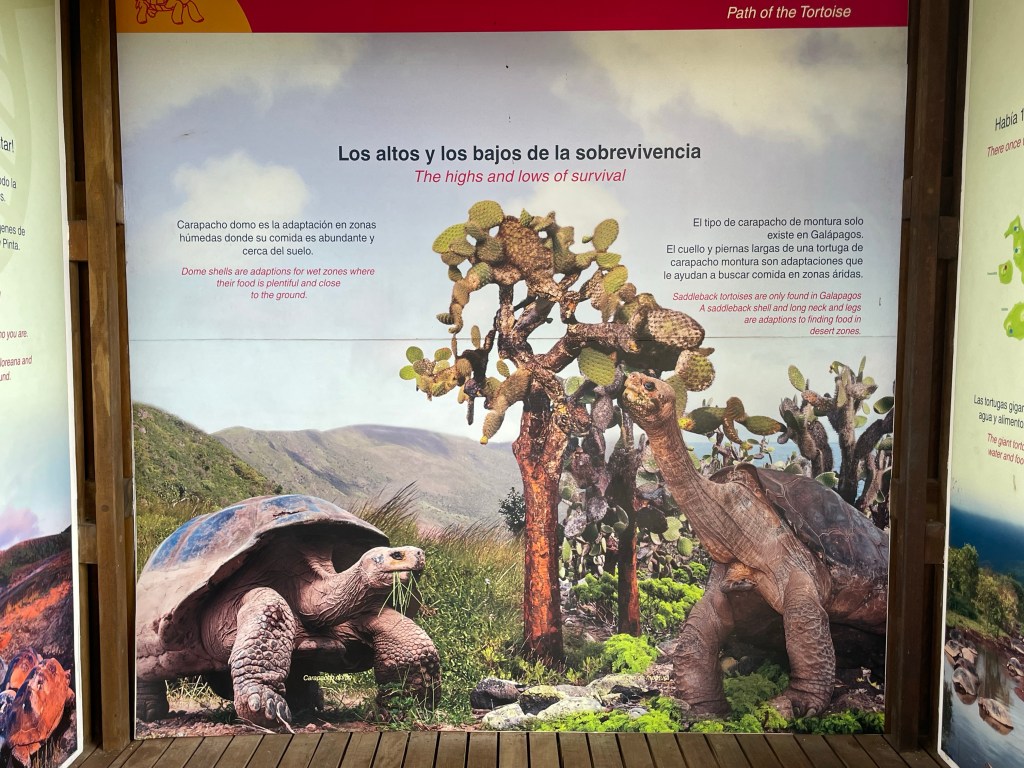
In addition to the babies, they had giant tortoises of various species, with the males and females separated, that had been confiscated as pets. Many were larger than those on Isabela. I could see the differences between the Isabela tortoises and the Santa Cruz tortoises. On Isabela they have shorter necks as the food is closer to the ground. On Santa Cruz they had long necks, as they have to reach higher for a meal. Their scaled necks resembled snakes as they stretched them out to reach a leaf or down to the ground as they rested. Speaking of which; they looked sooooo funny with their necks stretched down! You’d have thought they were broken!
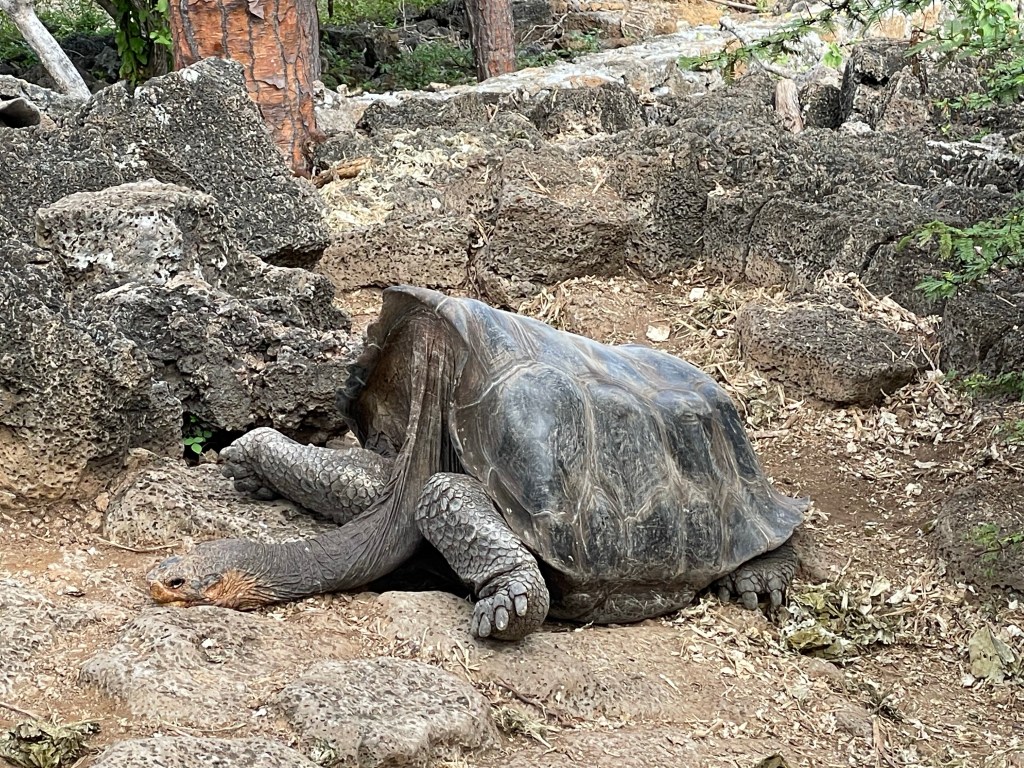
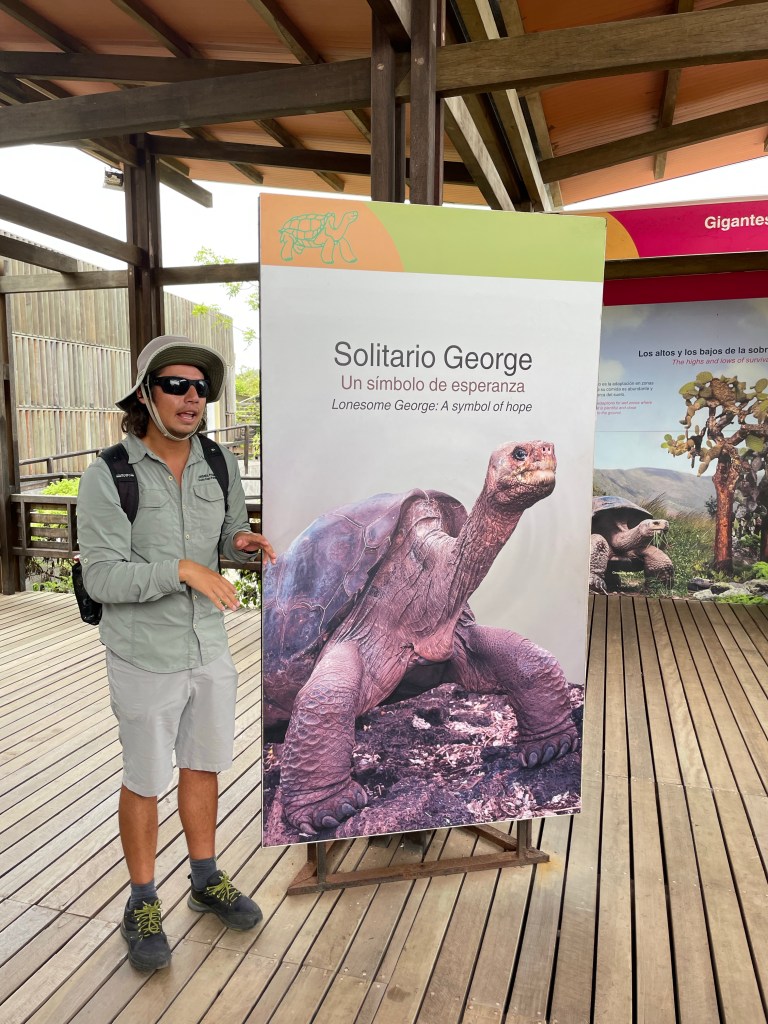
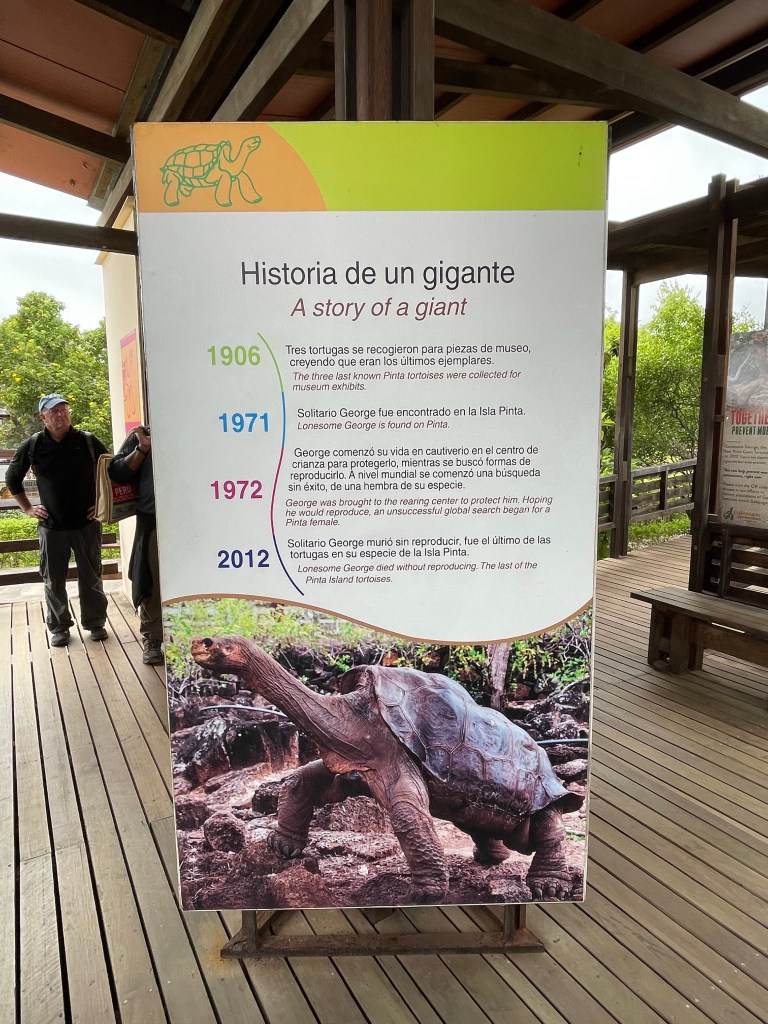
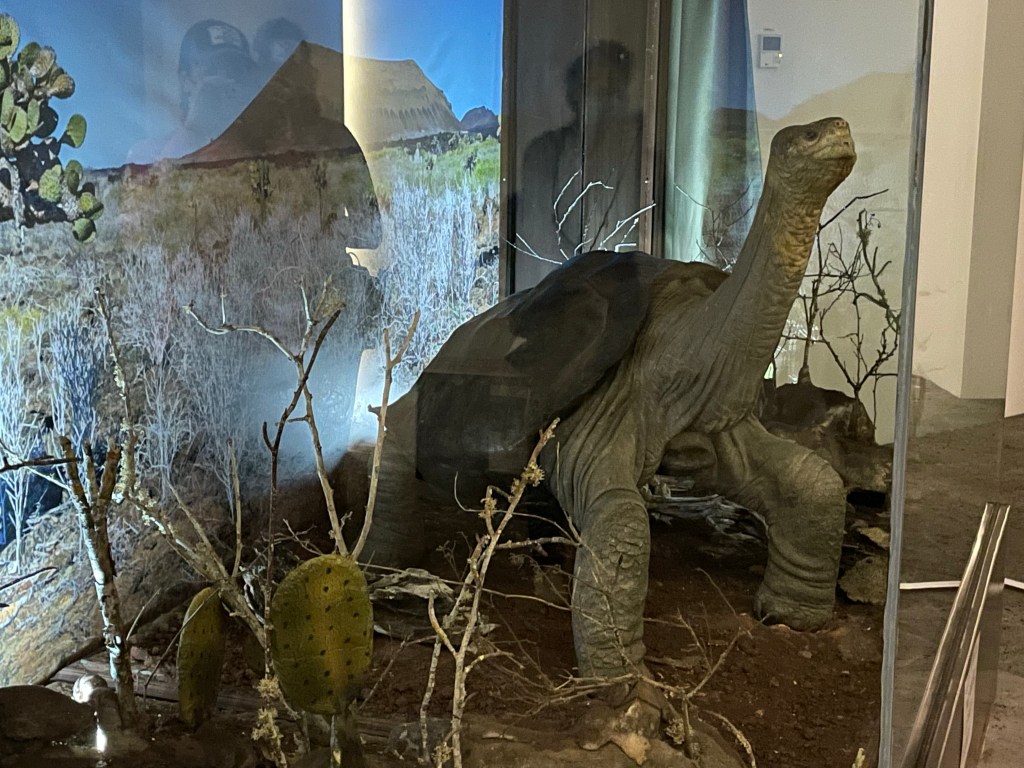
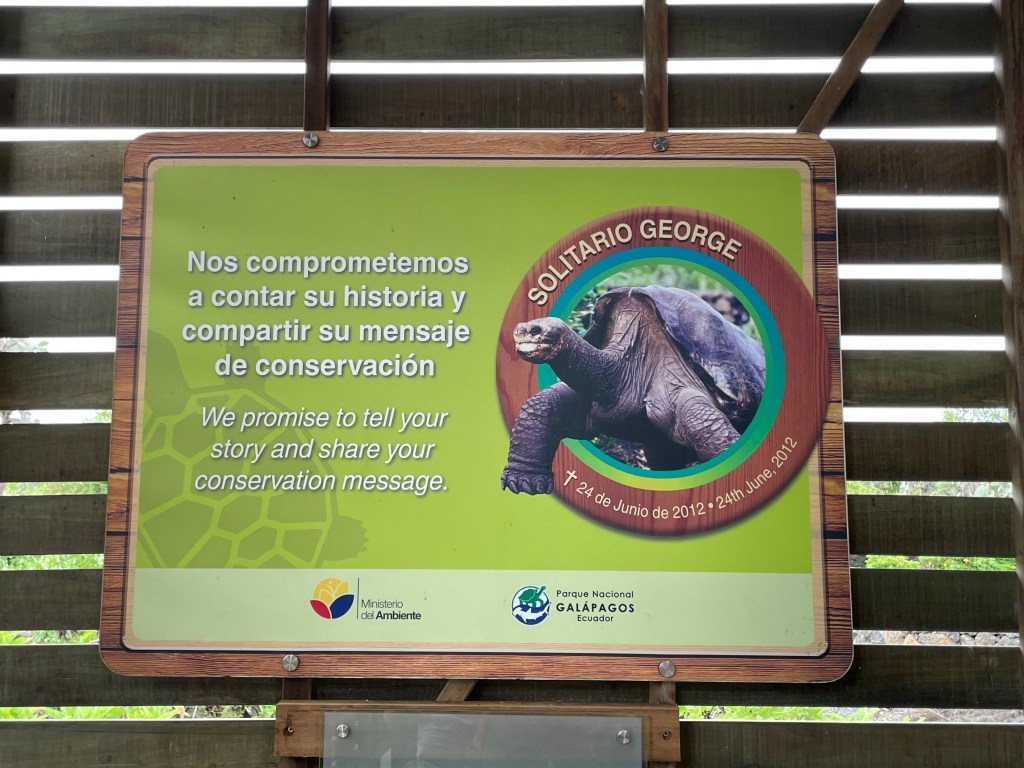
We spent two minutes in an an acclimation chamber before entering a cold room containing the taxidermic remains of Lonesome George; the last surviving tortoise of Pinta Island, the last surviving Pinta tortoise period. All other Pinta Island tortoises had been hunted by pirates and were eradicated and then Lonesome George was found. Lonesome George could never reproduce since his gonads never matured; apparently if you don’t use it you really do lose it! In 2012, he died at the ripe age of 130 years old, and the Pinta species went extinct with him.
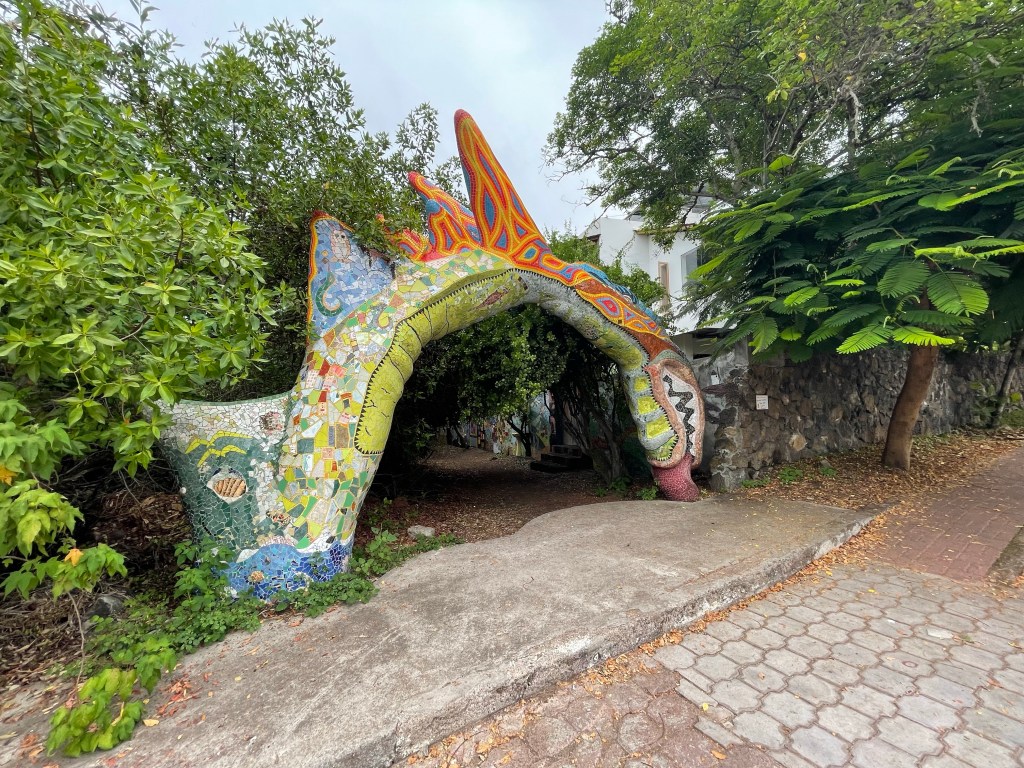
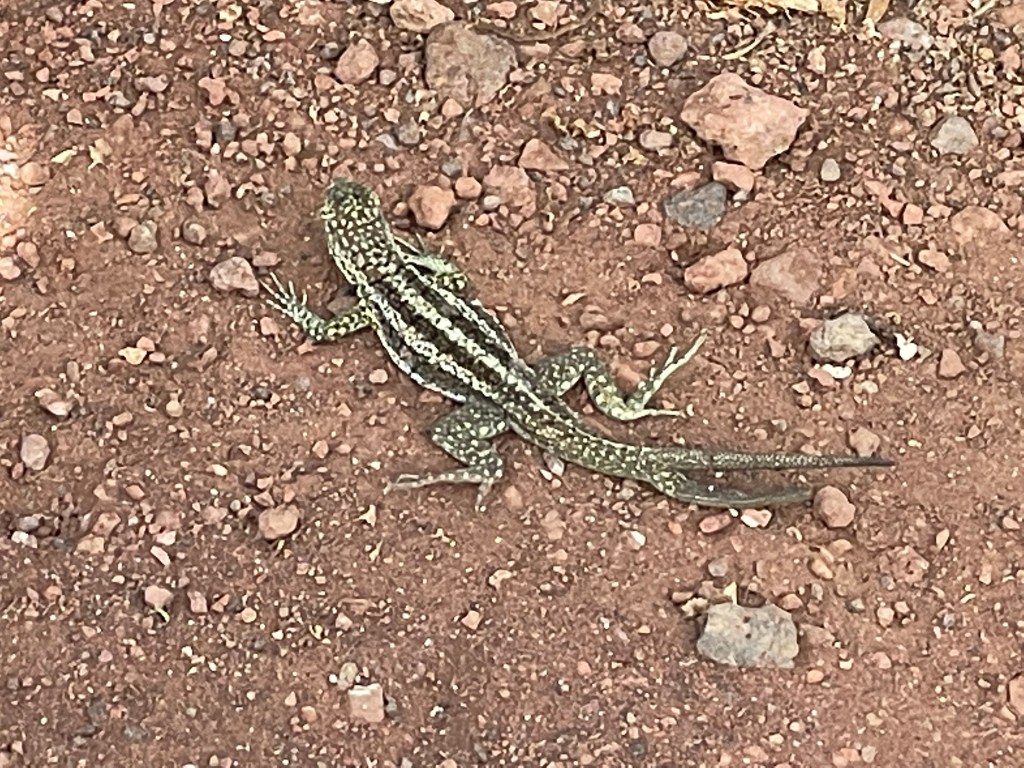
Upon the conclusion of Darwin Research Center tour, we had free time to wonder the town for about an hour and meet back at the pier in Puerto Ayora. Leaving the research center, a lizard with a split tail lingered on the side of the road. He was as curious about us as we were about how the heck he ended up with a forked tail!
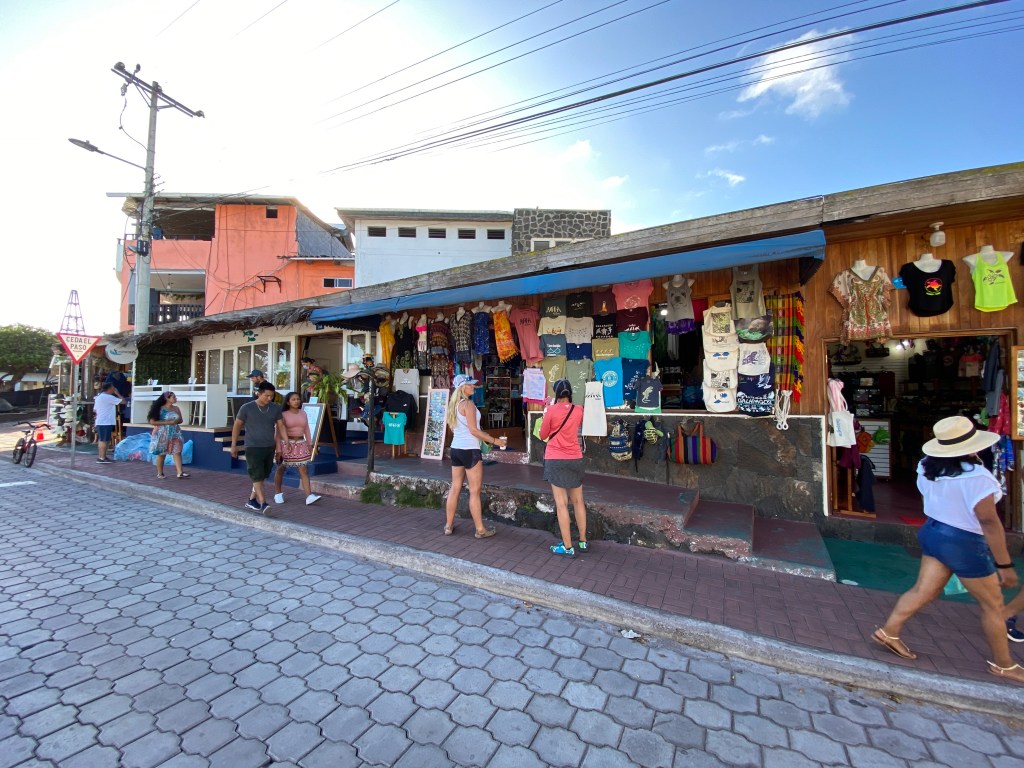
The local we had talked at the airport on Isabela was spot on; Puerto Ayora is quite the tourist town, complete with every other shop selling the exact same souvenirs. I’ll admit, I did buy a tank top. One of cheap material that will probably be scratchy and shrink to Barbie-size after one wash. But the store was a little off the beaten path and I felt bad for the girl in the shop after she searched and found my size. It was worth it, $20 will go a lot further for the shop than it will for me. More excitingly, I also got a guanabana smoothie! I peered in the window of an art gallery that was not open at that particular hour and spotted a wooden carving that I think I may have to go back for when I’m back here in a few days.
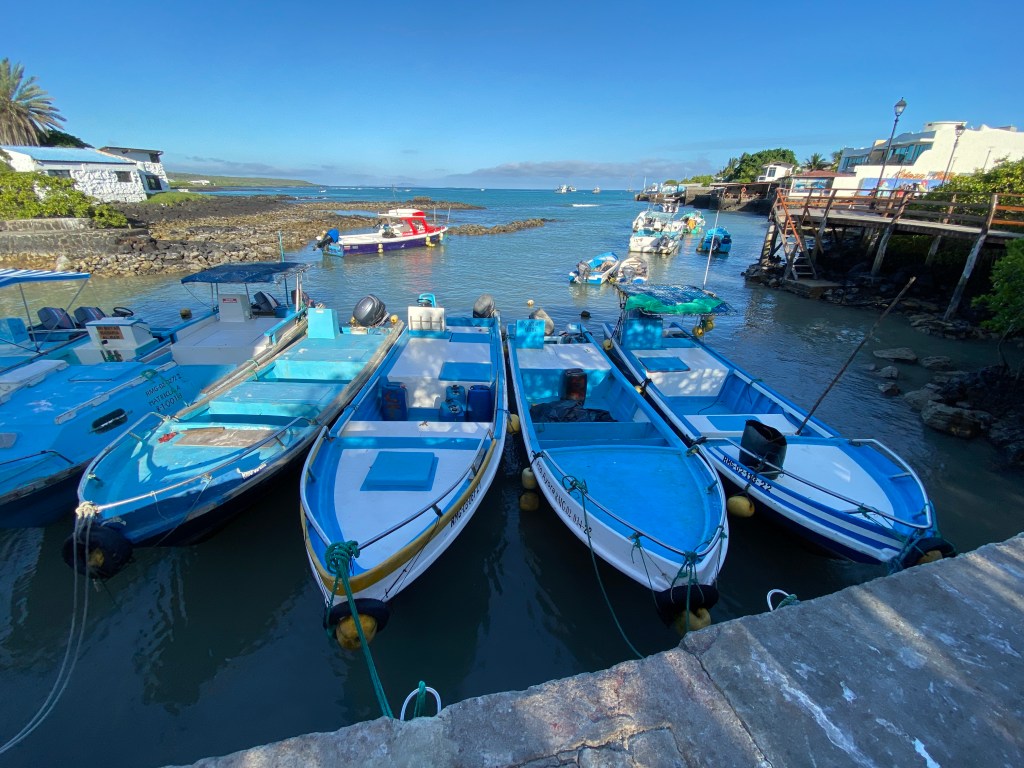
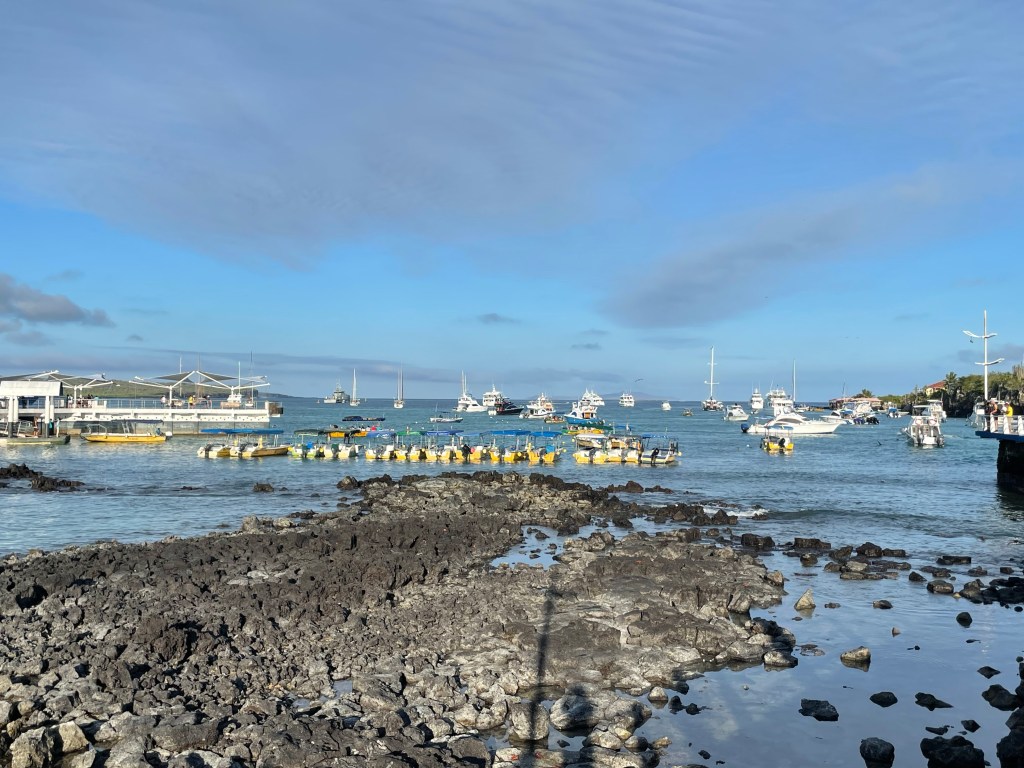
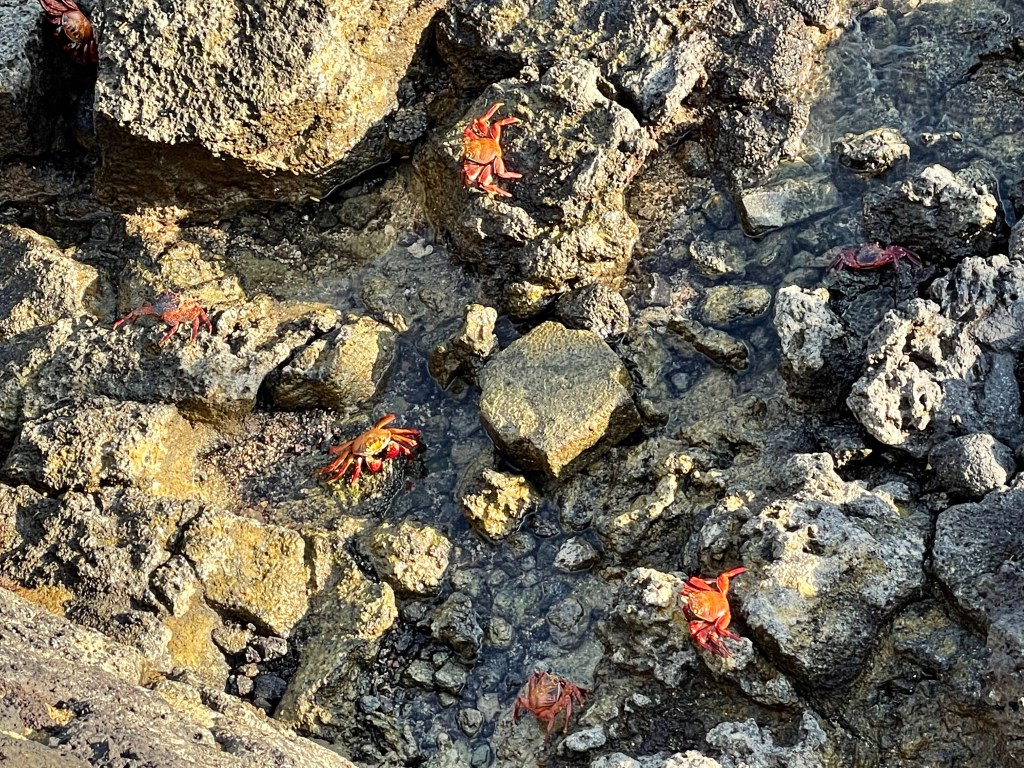
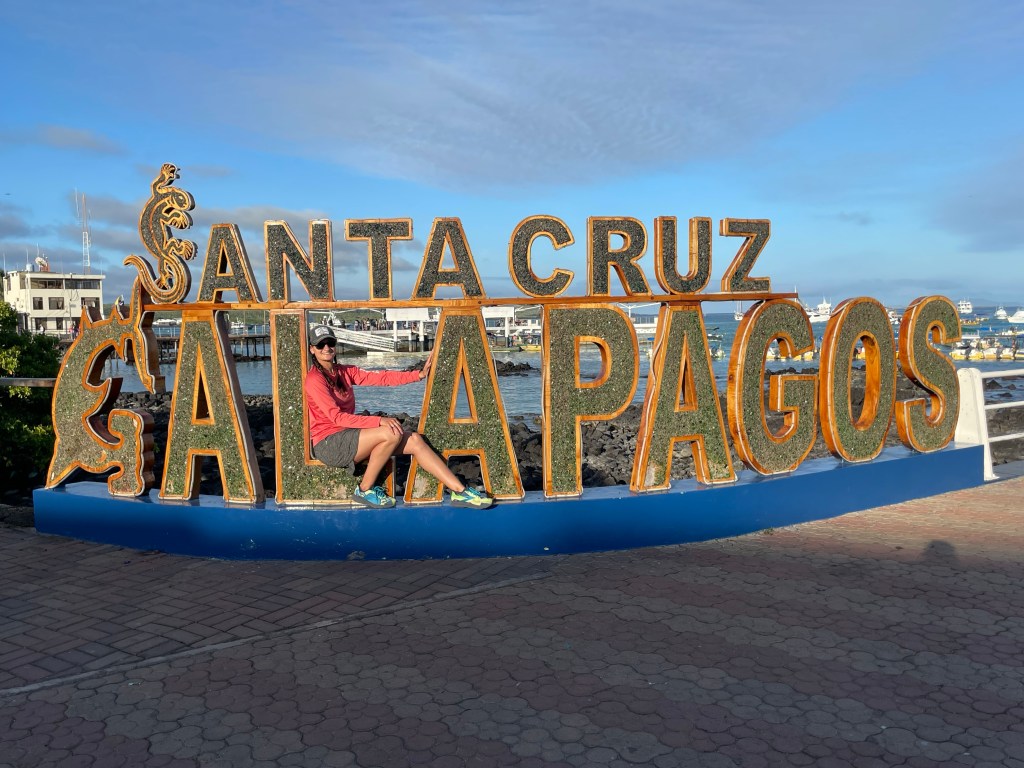
Boats of similar shapes and sizes lined the harbor area. Marine iguanas climbed the wall of the pier with red crabs clacking around beneath them. This was where we were to meet our guide. We saw other Coral I passengers lingering and took turns taking pictures of each other in front of the sparkling Santa Cruz sign. Kyra had mentioned that her previous cruise didn’t have any champagne or sparkling wine available on board so when we spied a little market at the end of the pier we ducked in to grab a couple bottles while waiting to board our private group bus, not realizing how slow the check out situation would be. Our little sparkling wine run made us the last on the bus and I felt bad that we’d held the group up, if only for five minutes.
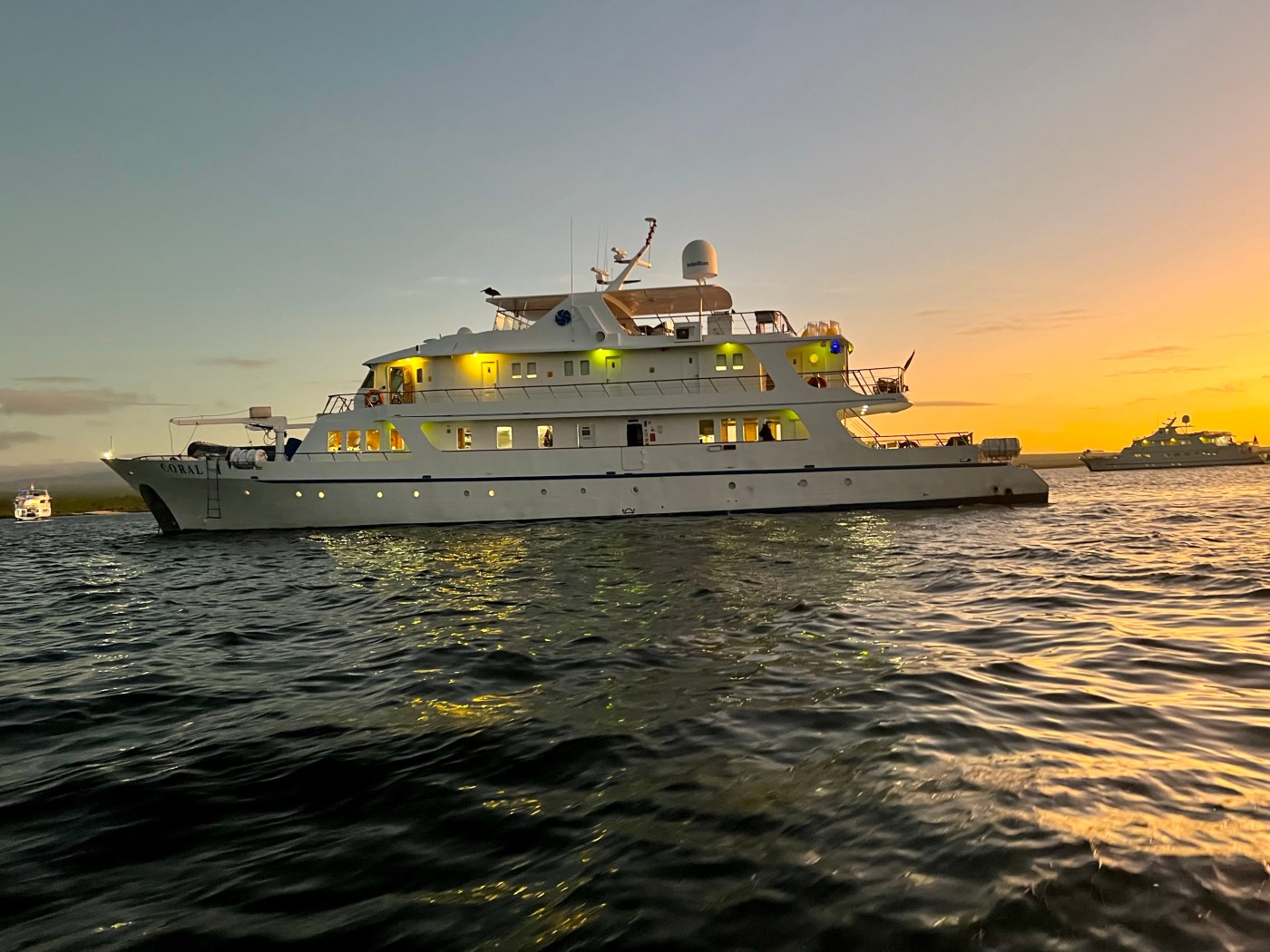
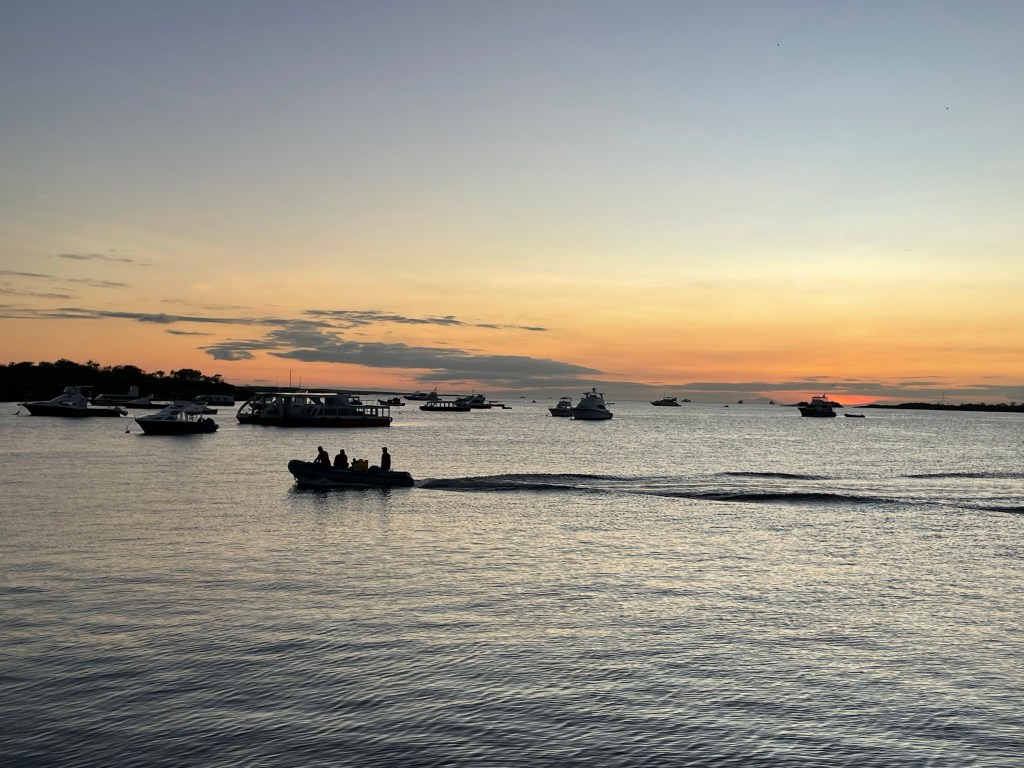
It was another 40 minute bus ride back to the dock with nothing really interesting or of note to see. I was just anxious to get to the yacht! Back at the Santa Cruz dock, the group was loaded onto zodiacs to take us to our home for the next few days. As the sun set, the zodiacs escorted us to the Coral I yacht; and she was a beauty.
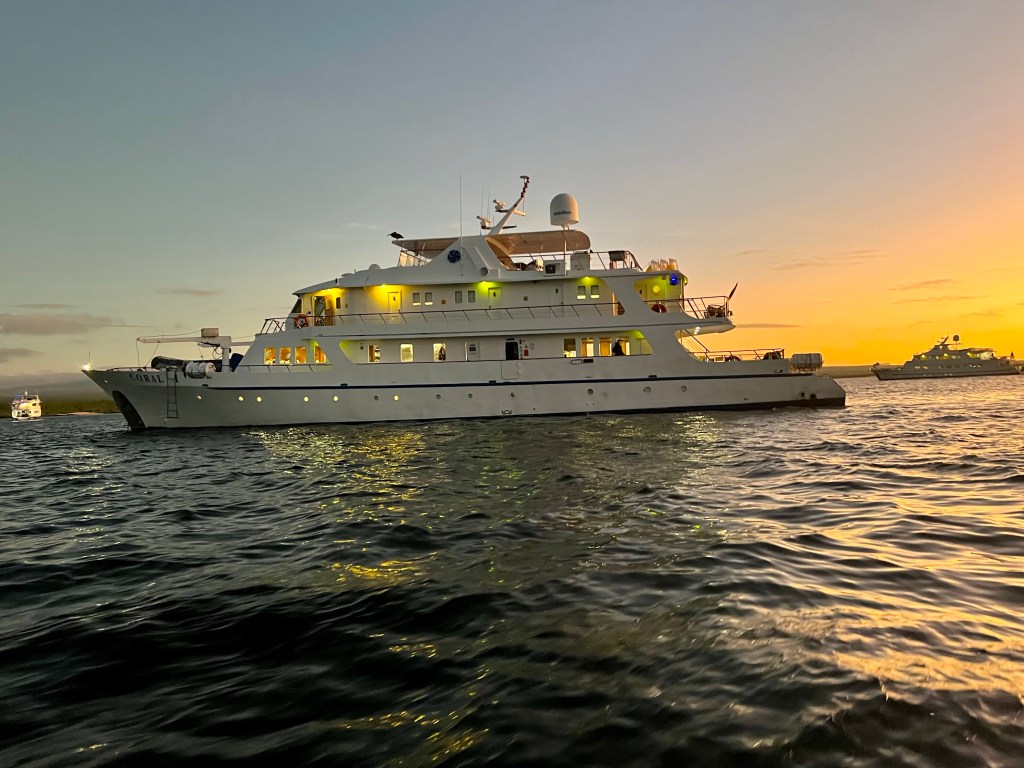
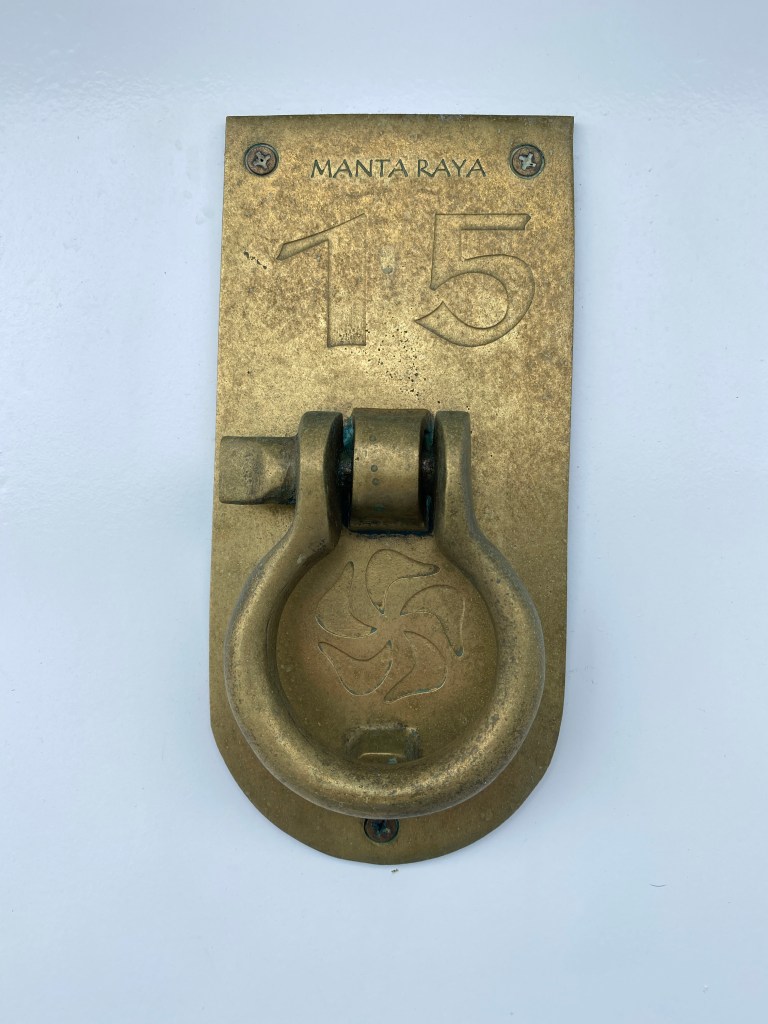
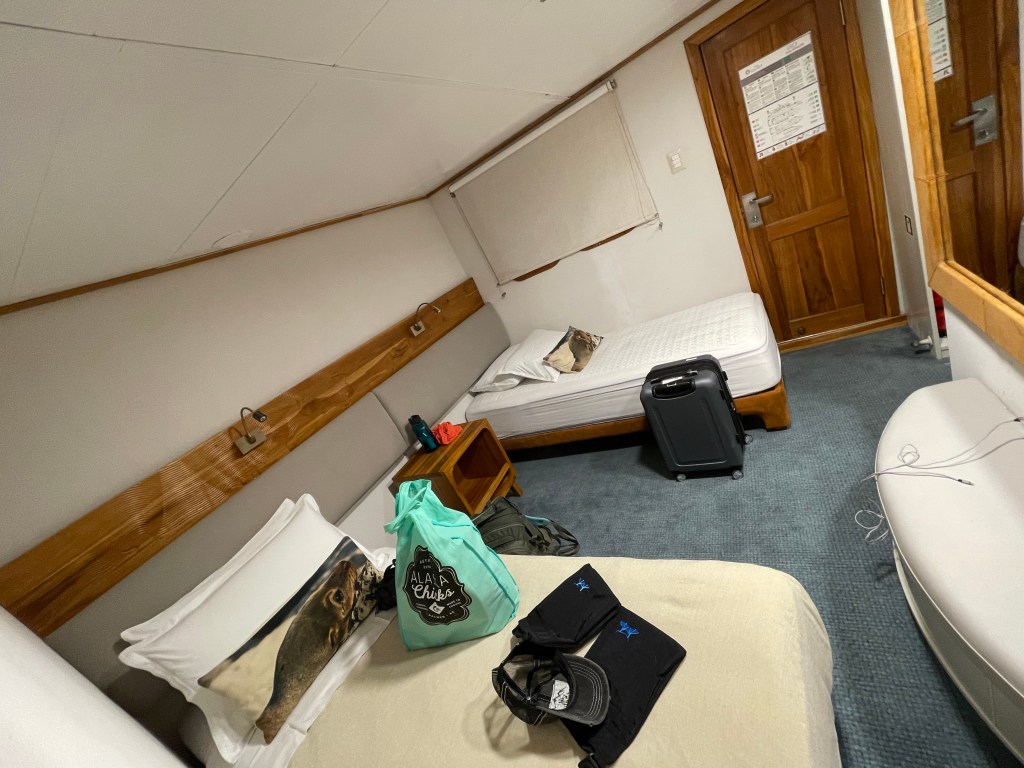
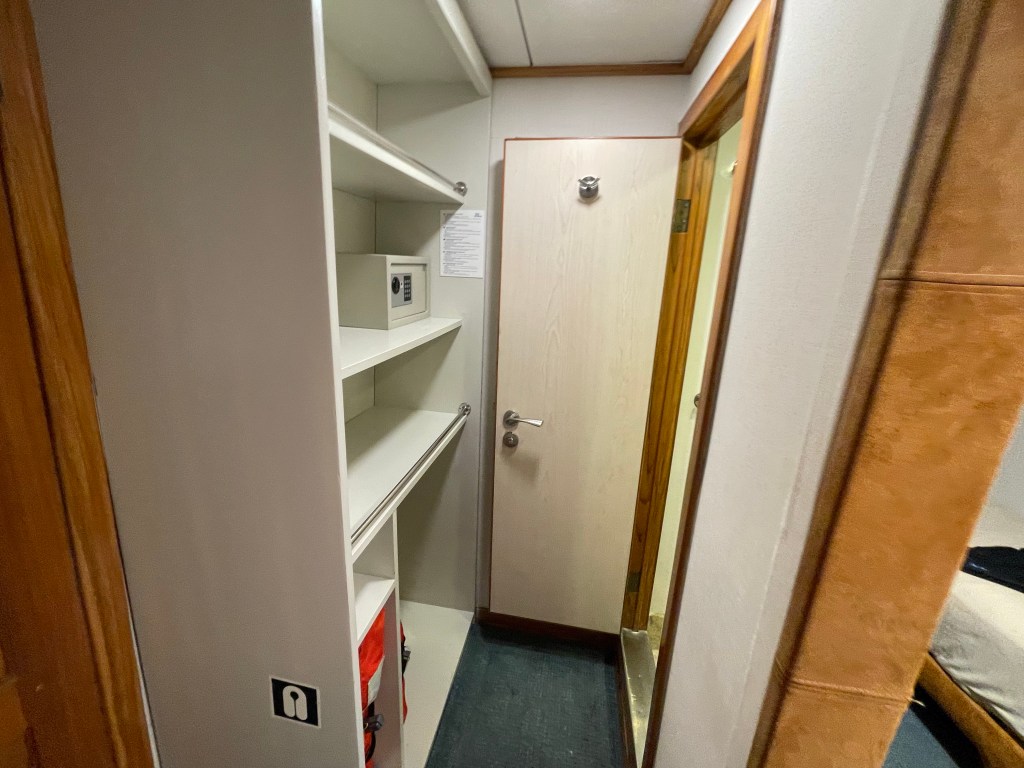
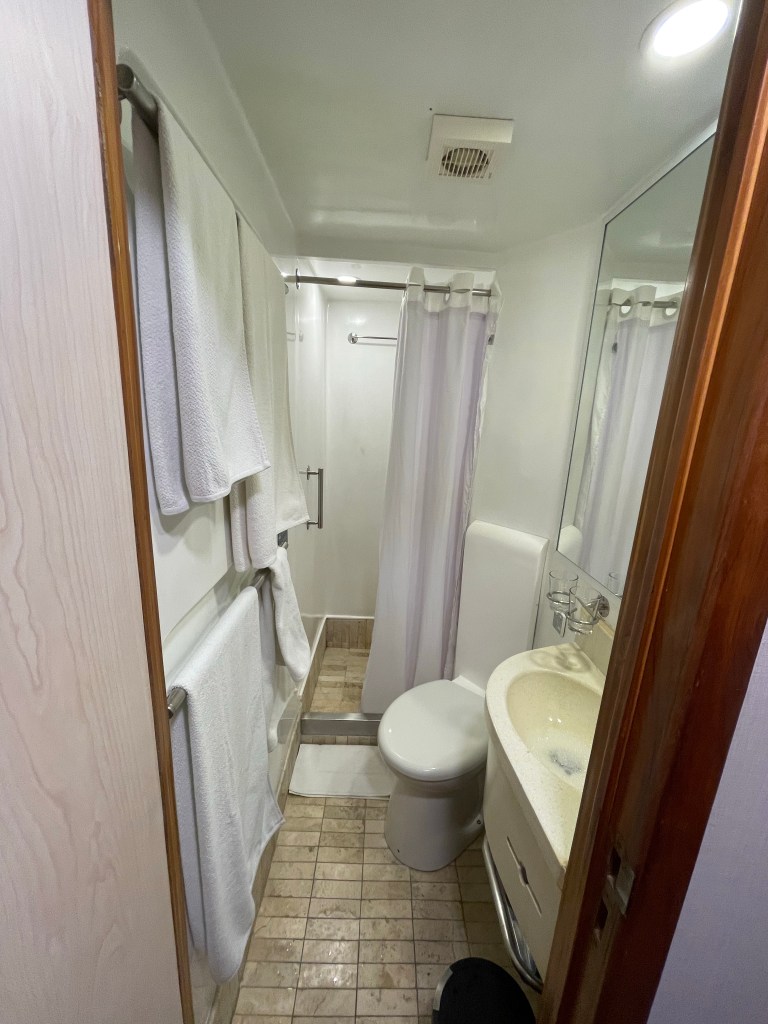
Once on board, everyone was ushered into the lounge where room assignments were given out and we were informed that dinner would be in about half an hour. I’m in room 15, named the Manta Ray Suite. My room is more spacious than I had expected. Two twin beds with a very wide space in between, a nice little shelving/closet area and a bathroom large enough to stand up in and turn around; this would do just fine. With two beds I have an extra bed to lay my stuff out on which is super convenient. A large mirror on the wall makes the room feel even more spacious. Kyra and Paul are in an adjoining room so we can easily communicate. I like my little corner of the universe. Best of all, it’s on the top deck of rooms so I wouldn’t have to hear any engine or anchor noise and it has two decent sized windows to the outside.
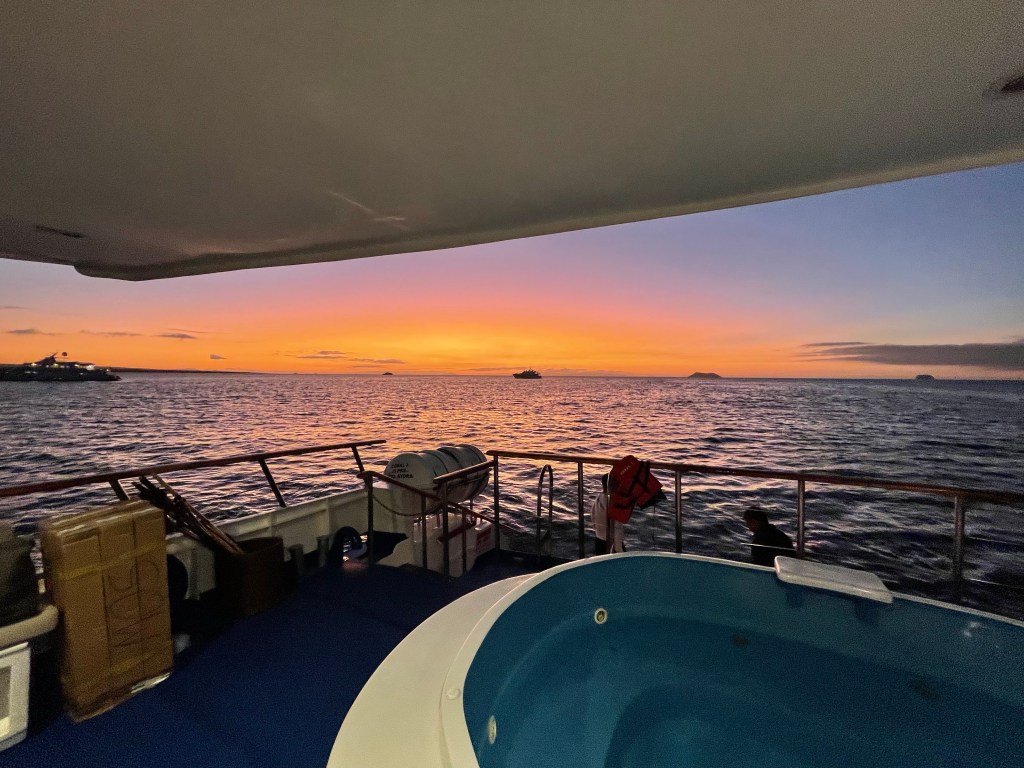
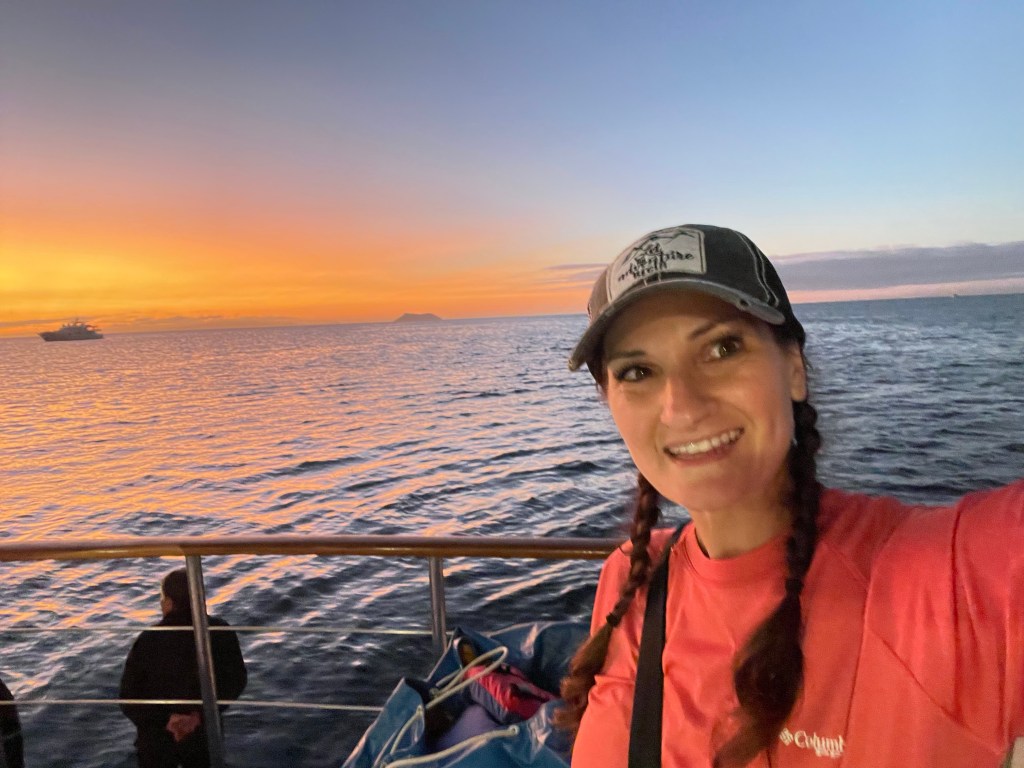
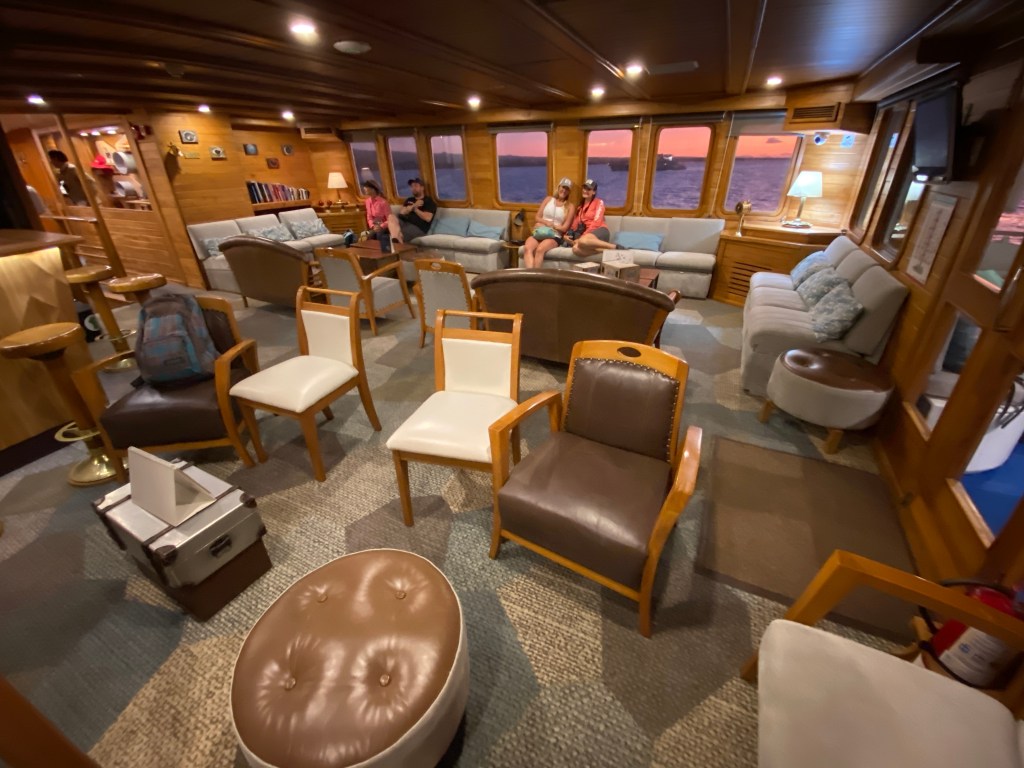
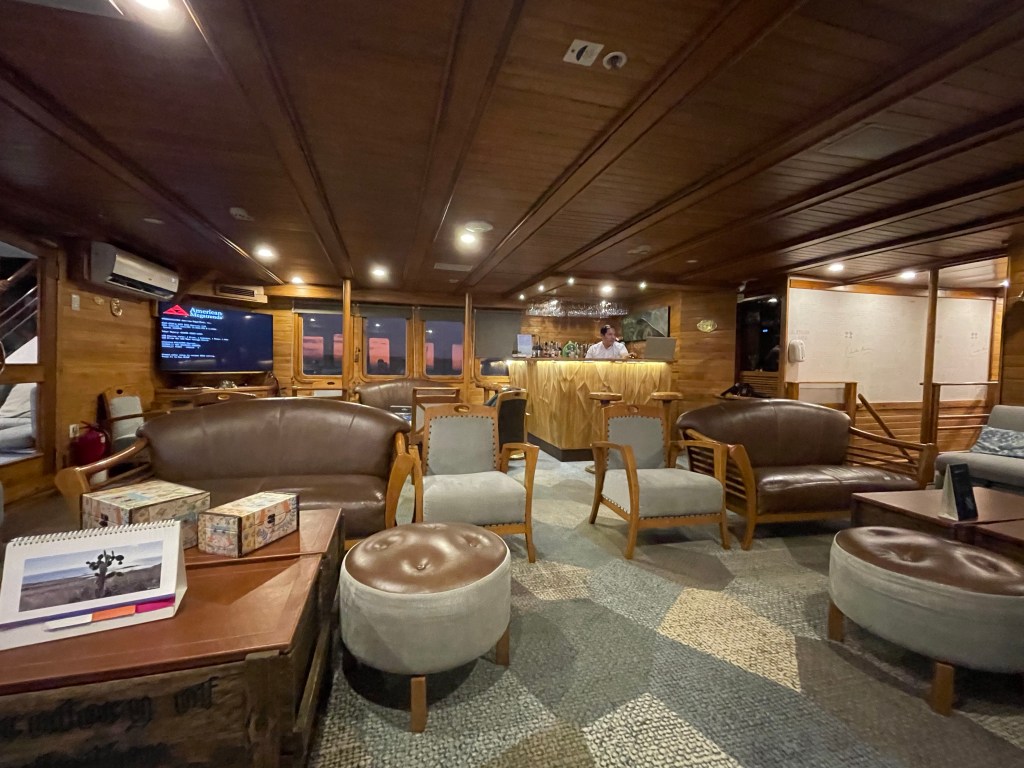
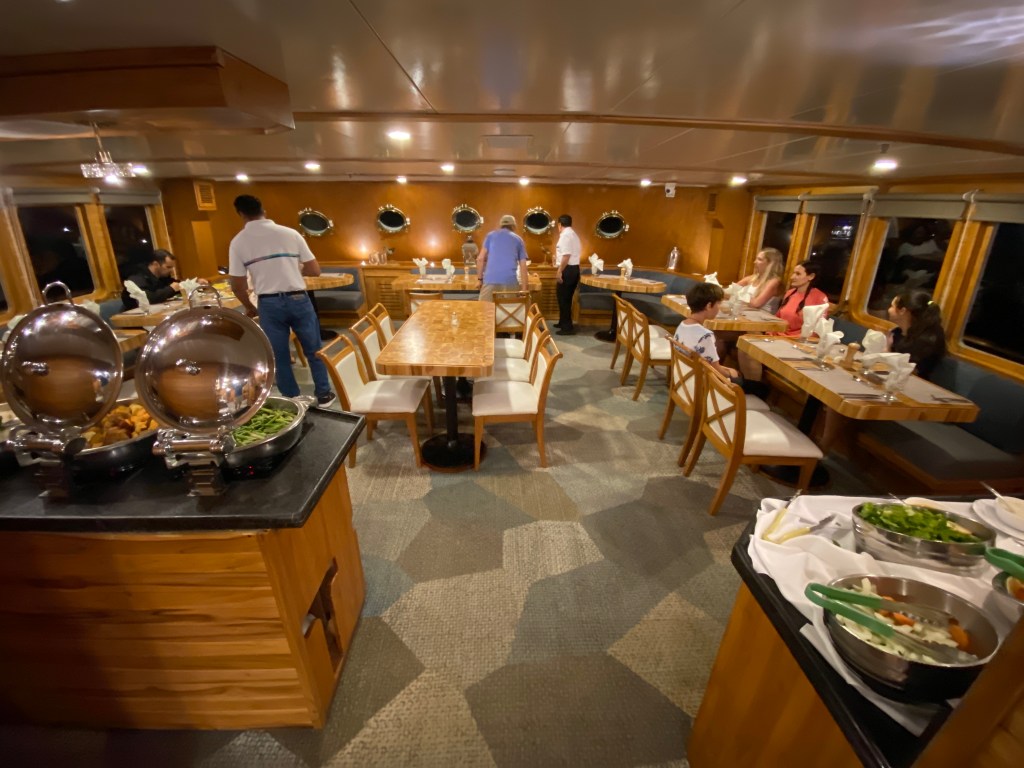
Dinner was delicious; a buffet featuring salad, asparagus, rice, squash, pork chops, and red snapper. The red snapper was phenomenal; I tried everything but the pork chop and it was all so good. A selection of cheeses and bread was also out with the desserts. Here I am, sitting on a yacht, in the Galápagos Islands, with a glass of bubbly in hand. Wow. Life is good.
After dinner we were asked to gather in the salon for a briefing on tomorrow’s itinerary. A schedule was presented on the large screen and the 6:45am wake up call became even more brutal when they told us that they operate the schedule on mainland time, not Galápagos time, so the schedule was an hour ahead. I immediately switched my phone time zone manually to not be confused the next few days.
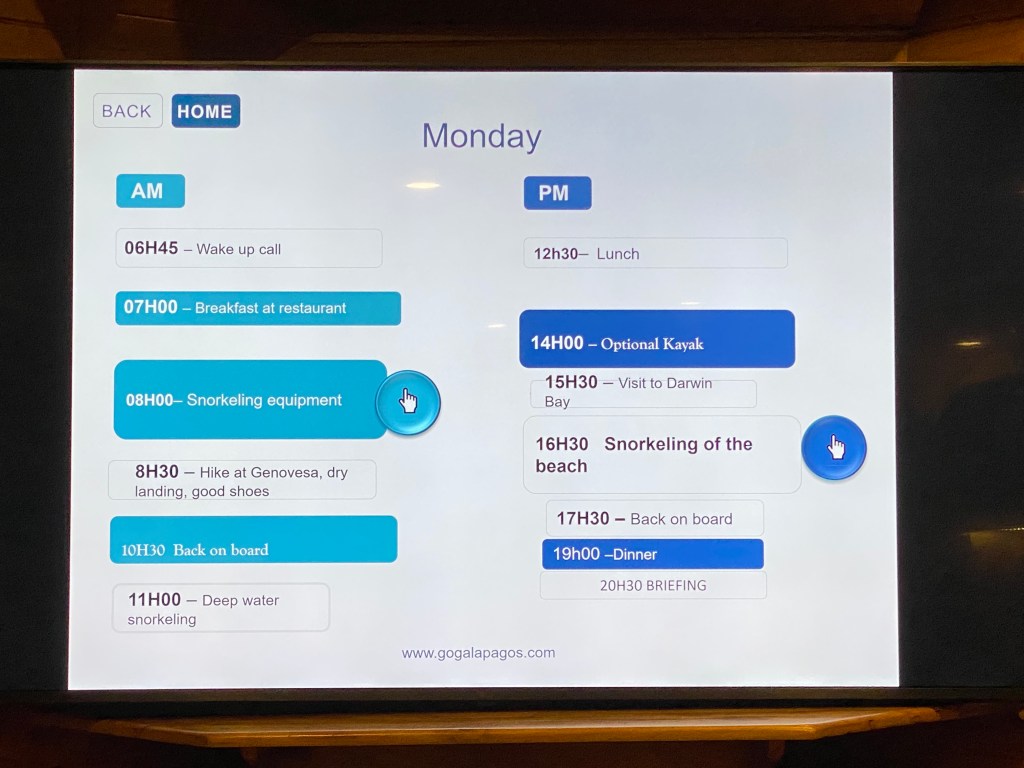
Tomorrow will be a full day of activities exploring Genovesa Island, far to the north. It will take about eight hours to navigate there overnight. As the briefing ended I realized that there had been no safety briefing! None, no mention at all. Fascinating.
Outside, the stars are ridiculously clear and bright. And upside down! Since we are in the Southern Hemisphere the stars have flipped; it’s a trip to see the Big Dipper upside down.
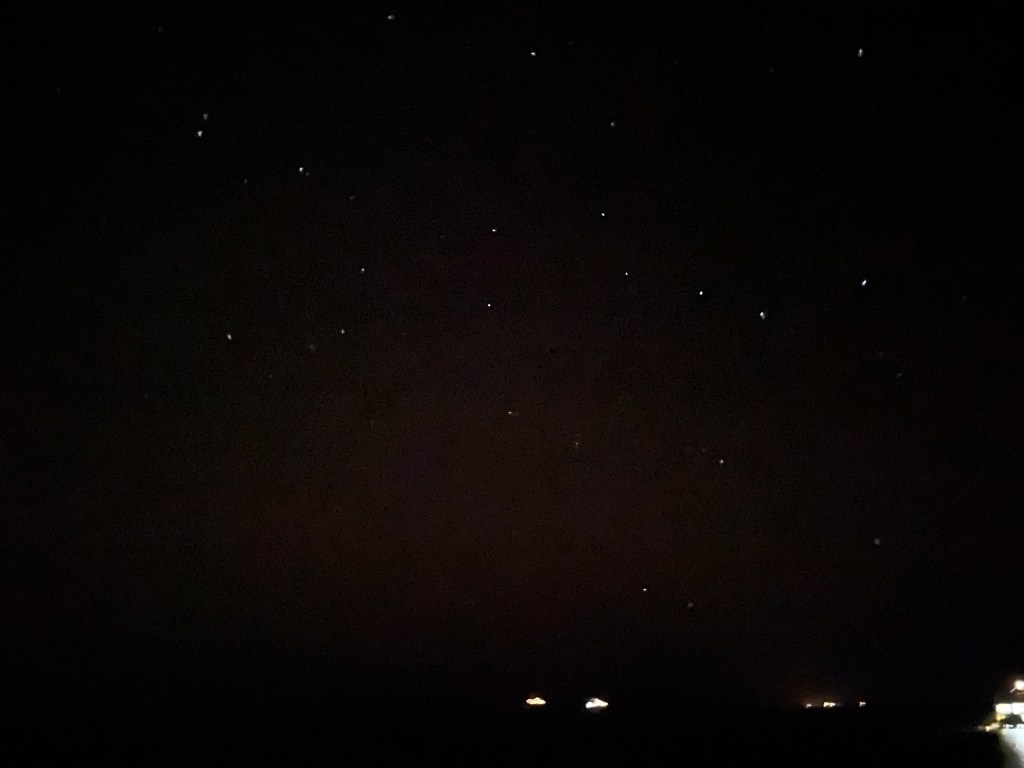
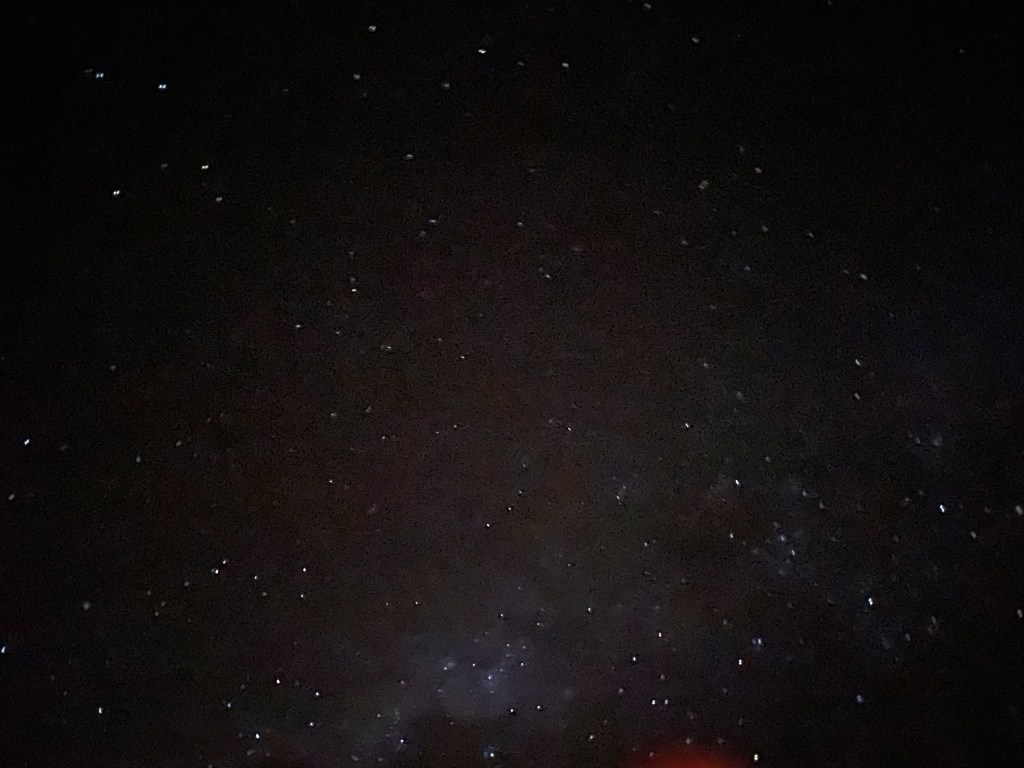
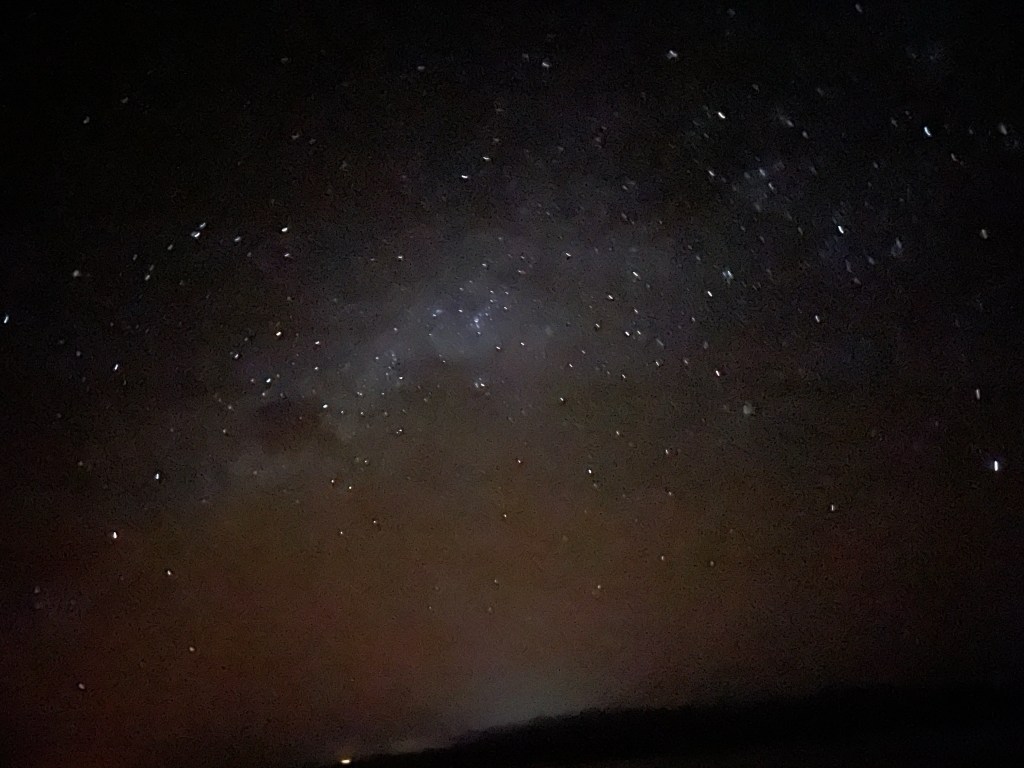
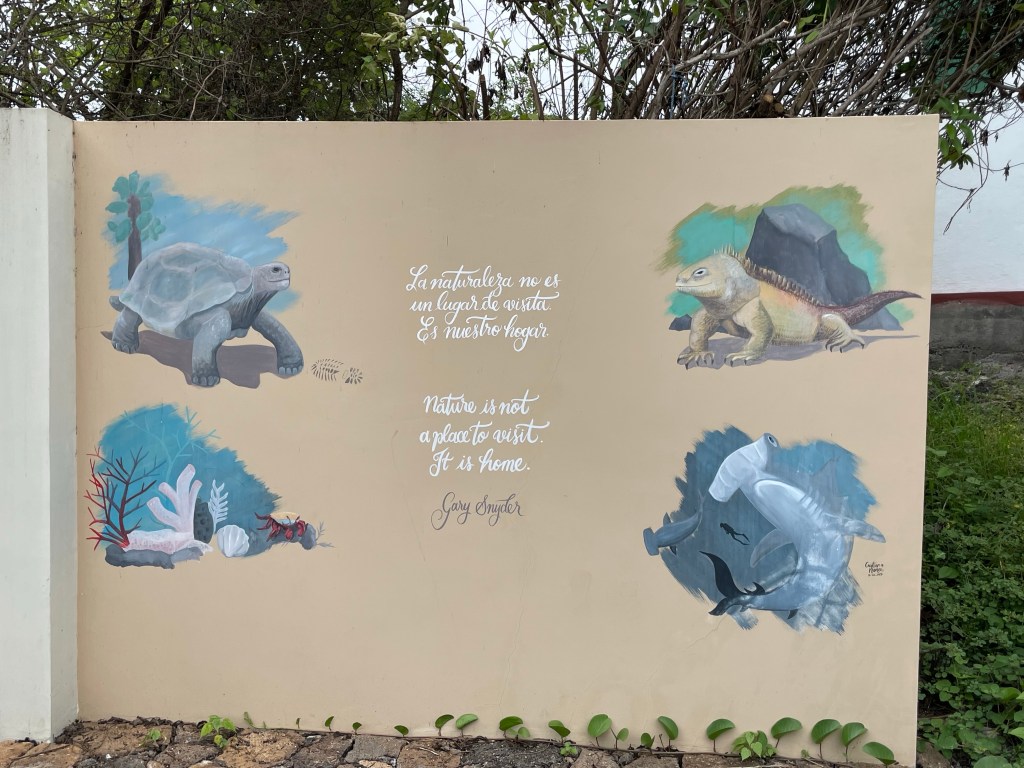
Tonight, I’ll leave you with a beautiful quote inscribed on the wall at the Darwin Research Center: Nature is not a place to visit, it is home. ~Gary Snyder


Leave a Reply